How Company Culture Actually Shapes Day to Day Work
Ask ten owners to describe their Company Culture and you'll hear about values, perks and that one great offsite back in 2022. Ask their employees and you'll hear about who gets interrupted in meetings, what happens when a deadline slips and whether anybody expects a Slack reply at 9 PM.
Both groups are talking about exactly the same company, but only the second group is describing the culture people actually show up to every morning.
Company Culture, which some people call workplace culture or organizational culture, is the set of habits that decide how work gets done when nobody is watching. For a company with 12 to 350 employees, those habits pile up fast, so let's walk through what culture looks like on a normal day, why it slips when you grow and how to shape it on purpose.
What Does Company Culture Look Like in Practice?
In practice, Company Culture is how people make decisions, handle mistakes and treat each other on a regular Tuesday. You can see it in who speaks up, who stays quiet and what gets rewarded when the quarter gets tight.
Picture a 40 person company in California. The handbook says "we value open communication." Then a coordinator flags a problem in the weekly meeting, the VP rolls her eyes and moves to the next slide, and nobody says a word. A month later, three people see a bigger problem coming and keep their mouths shut. The handbook didn't change, but everyone in that room learned the real life rule. That's the open door policy at most companies, and as I say in the book, "Most of those doors are propped open with ego and sealed shut with power dynamics."
That's why your Core Values matter less than what people watch you do with them. Research in MIT Sloan Management Review found that a toxic corporate culture is 10.4 times more powerful than compensation in predicting attrition. You can try to outbid a bad Tuesday with a raise, but it won't hold for too long. As I wrote in Don't Suck at Culture, "Culture isn't what you hope to be someday. It's what you reward, punish, and tolerate right now."
Good culture looks a little boring and that's an actual compliment. People know who decides what, feedback comes early and in private, and mistakes get fixed instead of buried. New hires figure out how things work in weeks because there aren't a bunch of secret rules to decode.
The Takeaway: Your culture is whatever people see happen after the meeting ends. So watch the follow through more than the big shiny poster in the lobby.
Why Culture Drifts When Companies Grow Quickly
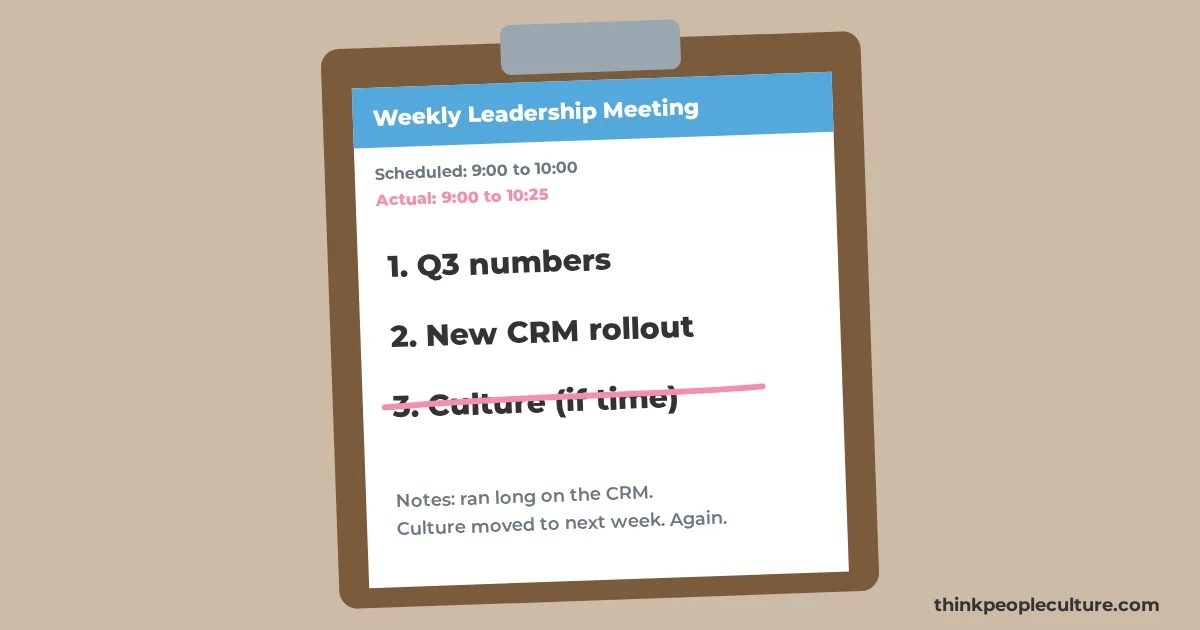
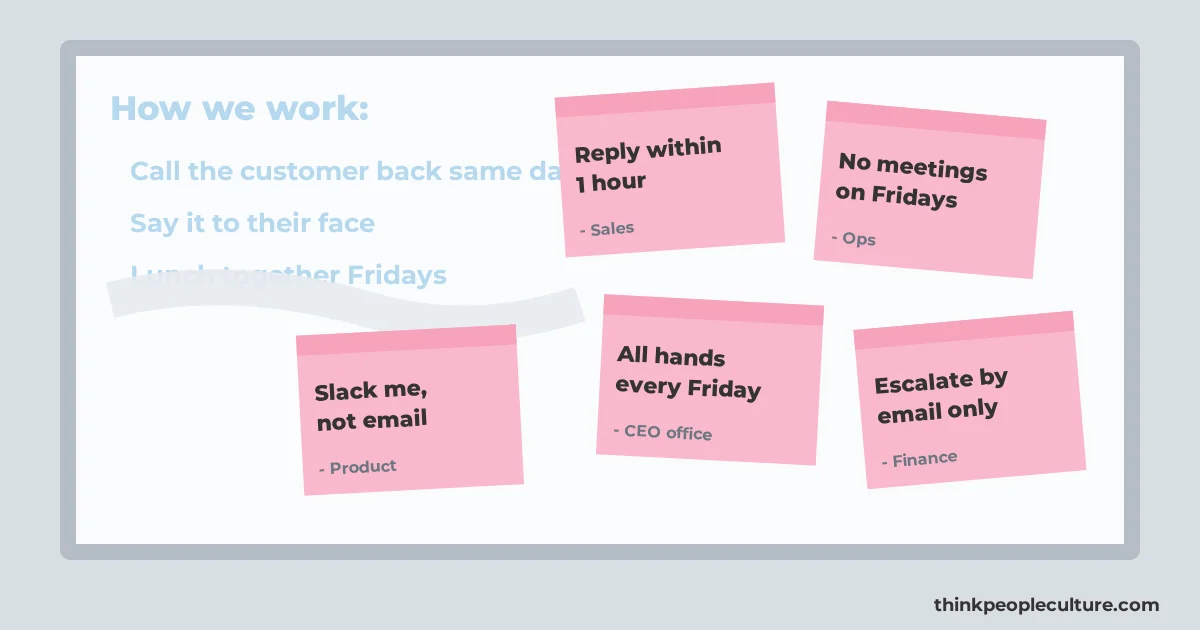
Culture drifts during fast growth because the owner can't be in every room anymore and not a single soul wrote down how things are supposed to work. At 12 people, culture spreads by sitting near the owner. At 80, it spreads through managers who got promoted last year and never got trained.
I've watched this happen more times than I can count. A company hires 30 people in a year and every new manager brings habits from their last job. One runs weekly one on ones, one runs none and one runs them by text from the parking lot. Six months later there are four little cultures living under one logo, and the owner can't figure out why the place "feels different."
Managers carry most of this weight here and that may be a surprise for you to know this. In a SHRM study, 76% of Americans said their manager sets the culture. And Gallup's State of the Global Workplace report found global employee engagement fell to 20% in 2025, its lowest level since 2020, while manager engagement sits at 22%, down nine points since 2022. When the people setting the culture are checked out, the culture follows them right out the door.
Drift also hides in the stuff growth makes you skip. Onboarding turns into "here's your laptop, good luck." Performance Reviews get pushed another quarter. Hiring gets rushed, so you hire whoever "feels like a fit," which usually just means they remind you of you. As I put it in the book, "Culture Fit hires mirror your gaps. Culture Add hires fill them."
The Takeaway: Growth alone doesn't wreck culture, but untrained managers and skipped basics will do it every time.
How Culture Shows Up in Everyday Moments
Culture shows up in the small moments that repeat every workday, like how a meeting starts, how a mistake gets handled and who gets the credit. Those moments shape the Employee Experience far more than any annual party or offsite.
Here are a few you can check this week, starting with the Monday meeting. If it never starts until the boss walks in or joins the call, you've taught the team that their time matters less than one person's.
The second one is “the mistake." When someone sends a typo to a client, does the talk start with "what happened" or "who did this"? The first builds a team that reports problems early, and the second builds a team that gets really good at hiding them.
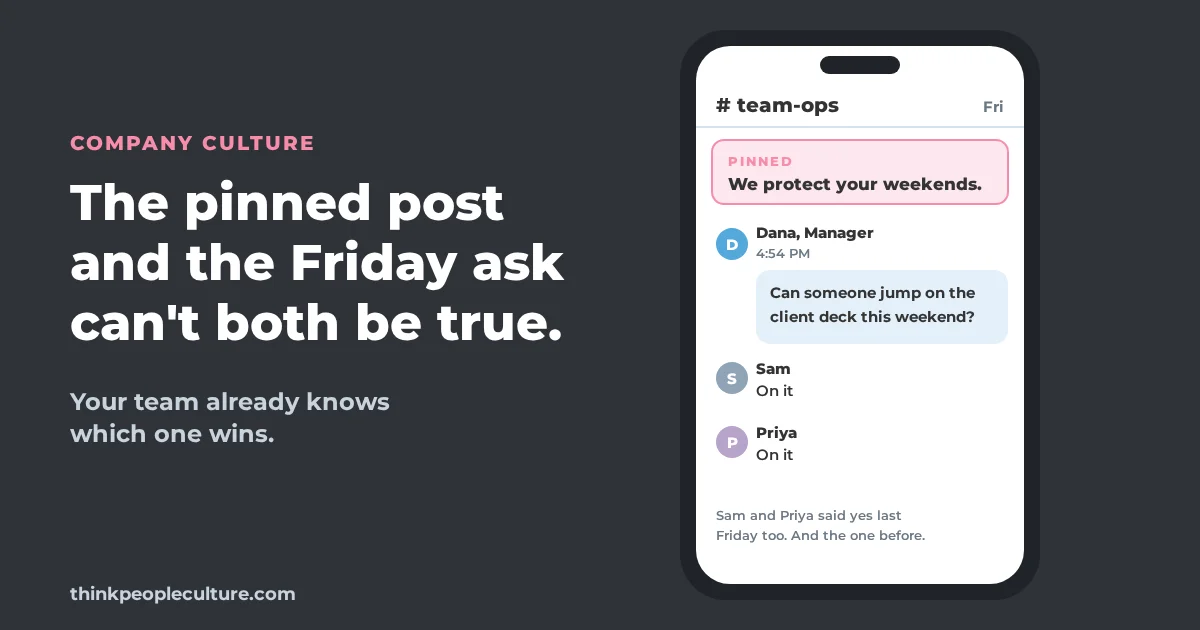
Then there's the Friday ask. A manager pings the team at 4:54 PM asking who can "jump on" something over the weekend, and the same two people say yes every…single…time. That's how you slowly burn out your best people, and I wrote about how that plays out in how to prevent high performer burnout.
The final one is the “thank you.” If good work only gets noticed in a Performance Review once a year and bad work gets noticed by lunch, people learn to play it safe. People repeat what gets noticed.
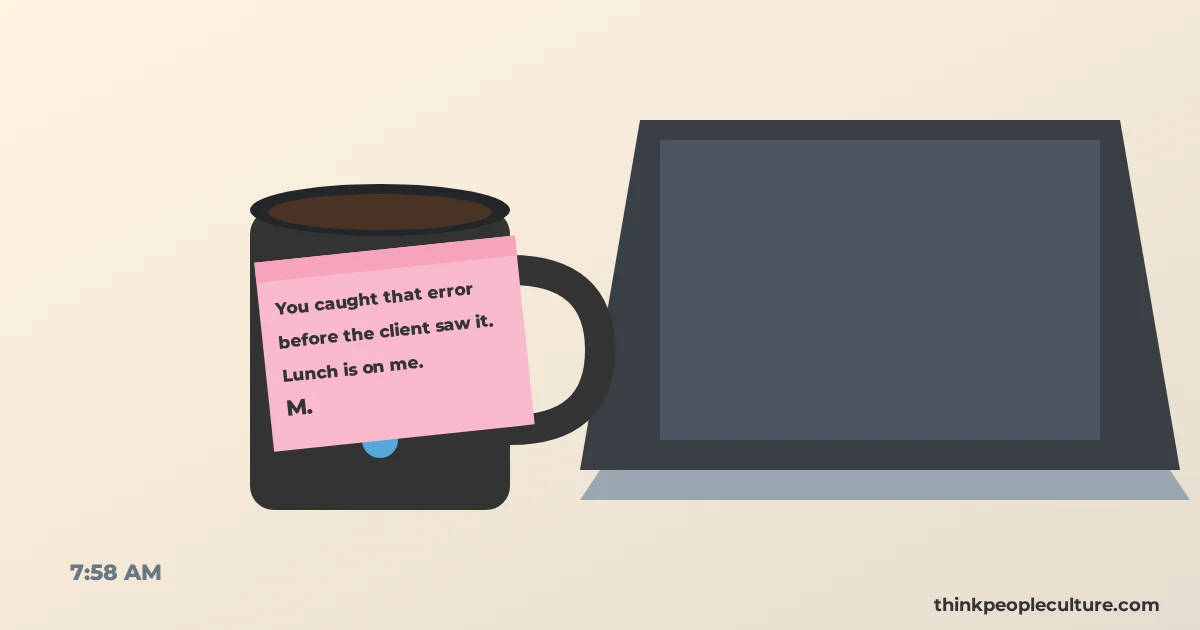
None of these moments cost a dime, and every one of them tells people what really matters here.
The Takeaway: Pick one everyday moment, watch it for a week and you'll learn more about your culture than a survey will tell you.
What It Takes to Shape Culture Intentionally
Shaping culture on purpose takes clear behaviors, managers who model them and a regular way to check whether it's working. Most companies have the first part on a wall somewhere in the building and skip the other two.
Start by turning each Core Value into something people can see. "Respect" is fuzzy. "We start meetings on time and we don't book over lunch" is clear. If you can't picture someone doing it, it isn't a behavior yet.
Next, train your managers, because they're the ones who make culture real or turn it into a punchline. Give them a simple one on one rhythm, a way to give feedback that doesn't feel like an ambush and a clear path for when an employee issue gets messy.
Then build it into the systems people touch every day. Hire people who add to it, onboard new people to it and recognize it out loud. Address it fast when it's missing, even when the person missing it is your top seller, because that's exactly when everyone is watching.
Finally, check it, because Pulse Surveys, Stay Interviews and honest Exit Interviews tell you whether the culture you describe matches the one people are living.
This is the work I break down step by step in my book, Don't Suck at Culture, which you can also grab on Amazon. In the book I call it ADDS: Authenticity, Diversity, Direct Communication and Support. It's written for owners who'd rather fix the real thing than buy another ping pong table.
The Takeaway: Define the behavior, train the managers, build it into your systems and check it, in that order.
When to Bring in Outside Help for Culture Work
Bring in outside help when a culture problem is costing you people, time or sleep and nobody inside has the time or the distance to fix it. For most US companies that moment lands somewhere between 12 and 350 employees, when "the owner handles it" stops working but a full time Chief People Officer doesn't make sense yet.
You'll usually see the signs first, like good people leaving with exit reasons that all sound the same, managers bringing you the same fires every week and teams that feel like different companies. It's also smart to get help before a big growth spurt, so you keep what's working before it gets watered down.
Waiting costs real money. SHRM found that nearly one in five people had left a job because of culture in the past five years, and that turnover due to culture may have cost organizations as much as $223 billion over that stretch. A strong company culture is how you attract and retain top talent, and a weak one quietly eats your productivity.
An outside HR leader sees patterns you're too close to see, and can say the awkward thing your team won't say to the boss. With fractional HR leadership, you get senior help from one person who knows your business, without adding a full time salary. My Culture Development service covers the whole arc, from defining the behaviors to training managers to setting up the check ins that keep culture from drifting again. If you're wondering how fractional work actually runs, the FAQ covers the basics.
The Takeaway: If the same culture problem has shown up three times, it's time to bring in someone who will own it with you.
Frequently Asked Questions
What is Company Culture in simple terms?
Company Culture is the shared set of habits that decide how work really gets done, like how people make decisions, give feedback and handle mistakes.
Can a small company have a strong culture?
Yes, and small companies often have the clearest culture because everyone sees the owner every day. The hard part is keeping it clear as you add people and managers.
How does company culture affect employee engagement and productivity?
Directly. When people trust how decisions get made and see good work noticed, they stay engaged and do their best work. When the real rules are hidden, people play it safe, and productivity drops right along with engagement.
How do you measure company culture?
Watch behavior, not posters. Pulse Surveys, Stay Interviews, Exit Interviews and turnover by manager tell you whether the culture you describe is the one people are living.
How long does it take to change Company Culture?
You can change a specific habit in a few weeks, but a change people trust usually takes a few months, because they need to see managers act the same way over and over before they believe it.
Who is responsible for Company Culture?
The owner sets it, managers carry it and every employee keeps it alive. If leaders don't model it, nobody else will either.
What's the difference between Culture Fit and Culture Add?
Culture Fit hires people who think like the team you already have. Culture Add hires people who bring something the team is missing, then builds the habits that let that difference stick.
Let's Fix the One Thing That Matters Most
If you read this and pictured one meeting, one manager or one Friday afternoon ask at your company, that's your starting point. Book a call and we'll figure out the one change that would make the biggest difference in your team's day to day.
Hire Better. Lead Smarter. Don't Suck!
Get HR Insights Delivered
Join our newsletter for the latest HR trends, tips, and best practices delivered straight to your inbox.
We respect your privacy. Unsubscribe at any time.