Culture Add vs Culture Fit: Stop Hiring Your Own Blind Spots
Paying for HR help and still the one fixing it?
Answer 8 yes or no questions, and in 2 minutes you'll know if you need software, a PEO or one person who owns it.
Show me what fitsYou just walked out of an interview grinning, and that grin might be the problem. She went to your college, loves the same podcast and laughed at your joke about the office printer.
Your gut says she's a great fit. So, what does culture add mean, and is it really better than culture fit? Your gut has been wrong about this exact thing more than once. Just ask the Jedi Council how trusting their gut on Anakin worked out.
This idea is the heart of my book Don't Suck at Culture. There's one interview question a lot of owners ask that I want you to delete for good. There's also one word, sitting in a lot of interview notes right now, that an employee's lawyer would circle in red. And a fresh 2026 number about managers explains why even a great Culture Add hire can end up shrinking to fit.
What Is Culture Add?
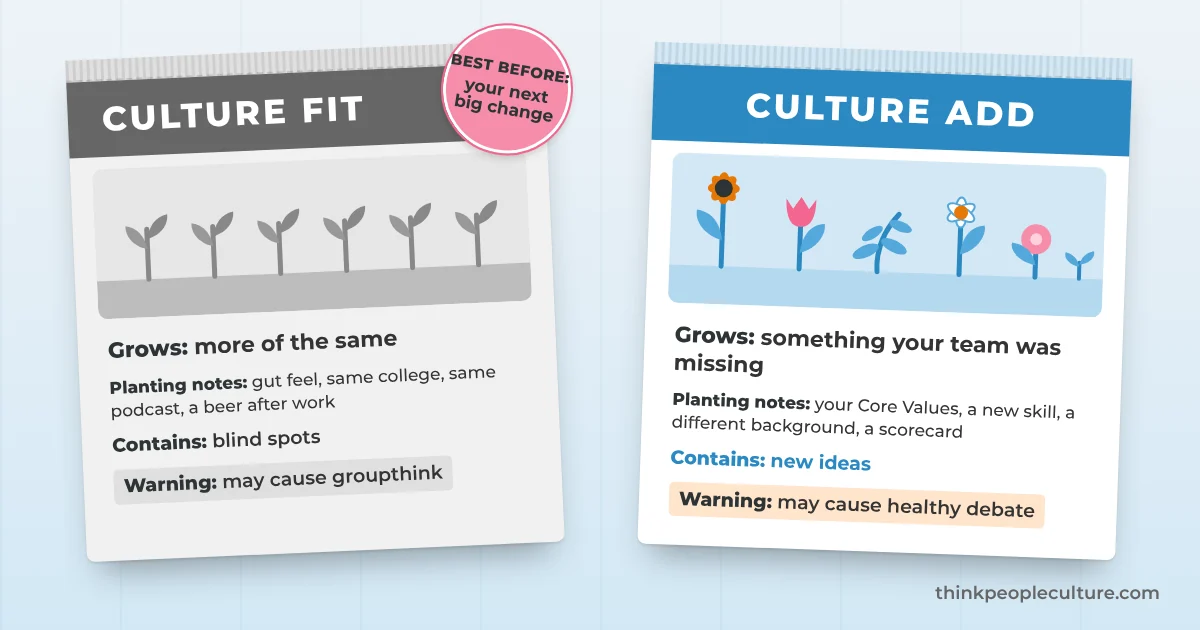
Culture Add means hiring people who share your Core Values and bring something the team doesn't have yet. Culture Fit means hiring people who match the team you already have.
On paper, "fit" is supposed to mean values. In real life it rarely does. I said it in Don't Suck at Culture, and I'll keep saying it, "'Culture Fit' is just a sanitized way of saying 'you remind me of me.'"
Research backs that up. When sociologist Lauren Rivera studied hiring at elite professional service firms, she found employers wanted people who were "culturally similar to themselves" in their hobbies, experiences and the way they carried themselves (Rivera, American Sociological Review, 2012). That shared culture "often outweighed concerns about absolute productivity." In plain English, "would I grab a beer with them?" often beat "can they do the job?"
Six rounds over two months, a take home project that ate a whole weekend and a former coworker on the panel vouching for her, and the candidate still didn't get the job. She'd even temped there for a year with glowing reviews. The hiring team's first reason was that they wanted someone who already knew the team. She already knew the team.
So, the reason changed to wanting "a slightly different energy," plus feedback that she came across as "a little too polished." That's a vibe check wearing a suit, and every time I tell this story, someone in the room has one just like it.
That doesn't mean anything goes. Your Core Values are the floor, and they don't bend. Background, style, experience and how someone gets to the answer are where you want difference. My post on how Company Culture shapes daily work sums it up, "Culture Fit hires mirror your gaps. Culture Add hires fill them."
| Culture Fit | Culture Add | |
|---|---|---|
| The question | "Would I hang out with them?" | "What are we missing that they bring?" |
| How it's judged | Gut feel | Behaviors you wrote down first, then scored |
| What can be different | Not much, everyone matches | Background, style, experience and thinking |
| What can't bend | Whatever the team already likes | Your Core Values |
| Who you end up with | More of the same | New strengths that still share your values |
| What's in the file | "Not a fit" | Written scores tied to the job |
The Takeaway: keep your Core Values fixed and let everything else be different, because that's where new ideas come from.
Why Hiring for Culture Fit Quietly Builds a Team of Clones
Nobody sets out to hire clones. It happens one comfortable hire at a time, because each one feels safe and gets along with the team. Three years later, you look around the table and everyone has the same strengths.
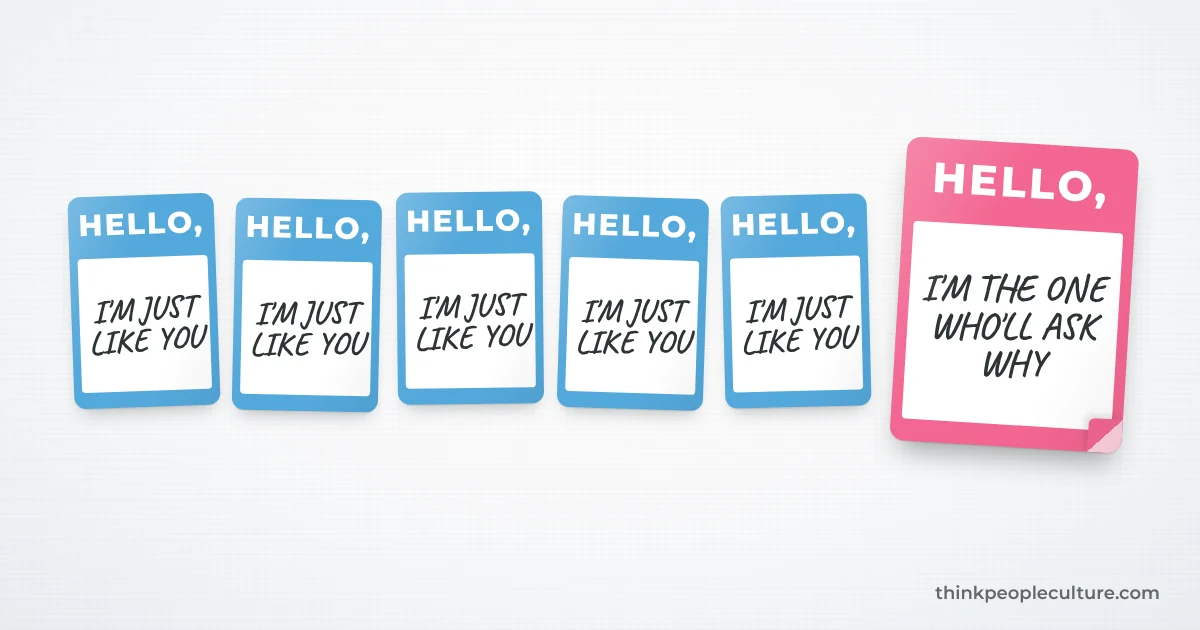
Remember the clone army in Star Wars? Thousands of soldiers with the same face and the same training, and not one of them asked a single question when Order 66 came down. That's a great army and a terrible leadership team.
They also have the same blind spots. When everyone came from the same kind of company, nobody in the room has seen the problem that's about to hit you. Five people who agree with you is a fan club, and you're paying all of them a salary.
You can read Chapter 3 of the book free. It opens with a line I'd tape to every hiring manager's screen, "Sameness isn't safety. It's stagnation."
A Kellogg School of Management study led by Katherine Phillips shows what that costs. Small groups worked on a murder mystery, then got one newcomer who was either an insider from their own social group or an outsider. Groups with an outsider picked the right suspect "with far greater frequency" (Kellogg Insight). The all insider groups felt more confident, "even though they were more often wrong in their conclusions."
That's Culture Fit in one experiment, because it feels better and works worse. The loss never shows up on a report, it shows up as the customer you didn't see leaving and the mistake nobody questioned.
The Takeaway: a team that agrees fast feels great, so check whether it agrees because it's right or because it's alike.
7 Ways Culture Add Changes Your Workplace
When you hire for what's missing, seven things change, and you'll feel them fast in a company with 12 to 350 employees.
- New ideas show up faster. Different people spot different problems, so you sit through fewer "we've always done it this way" meetings.
- You adapt faster. Someone in the room has already seen the curveball at another company or in another industry.
- Inclusion gets real. You stop saying you value differences and start hiring for them.
- You stay close to your customers. If your customers don't all think alike, your team shouldn't either.
- Your culture stops getting stiff. If the newest idea in your weekly meeting is the same one from three years ago in a new font, that's stagnation.
- Decisions get better. More viewpoints get heard before you commit, which is exactly what the murder mystery study showed.
- Better candidates say yes. People can tell when "we value differences" is just a slogan, and the good ones have options.
The Takeaway: Culture Add pays off in better ideas, better decisions and better candidates, but only if your hiring process is built to find it.
How to Interview for Culture Add
To interview for Culture Add, decide what your team is missing before you post the job. Then ask every candidate the same questions and score each answer against behaviors you wrote down first. That's called a Structured Interview, and it works better than it sounds.
The US Office of Personnel Management says interviews with more structure show "higher levels of validity, rater reliability, rater agreement, and less adverse impact" (OPM).
Adverse Impact means screening out one group of people more than others. A 2022 review led by Paul Sackett found Structured Interviews did the best job of predicting how people would perform, out of the hiring methods studied (SIOP).
Hoping AI will take the gut out of it for you? The 2026 data says not yet. Greenhouse asked job seekers about it in its 2026 Candidate AI Interview Report. In the US, 36% said they felt age bias from both AI and human interviewers. For race or ethnicity bias from both, it was 27%.
A new tool can't rescue a process that never decided what good looks like. That part is still on you, and it starts before the job ad goes up.
1. Name the Gap
Before you write the job ad, write down two or three things your team is missing. Maybe it's someone who pushes back, or someone who loves process when everyone else loves winging it. Put those right next to your Core Values, so every interviewer hunts for the same things.
2. Delete the Fit Question
That's the question I promised you, "would you fit in here?" Delete it for good, because it's a polite way of asking "are you like us?" Its cousin "would I grab a beer with this person?" goes in the trash too.
Swap in questions built on ADDS, the four culture elements from my book.
- Authenticity. "Tell me about a time you admitted a mistake at work before anyone else caught it. What happened next?"
- Diversity. "What's something you did at another job that you'd bring here, and what do you think we'd push back on?"
- Direct Communication. "Tell me about a time you disagreed with your manager. What did you say, and how did it land?"
- Support. "Tell me about a time you helped a coworker succeed when it didn't help you at all."
- The gap question. "From what you've seen of us so far, what do you think we're missing?"
3. Score It on a Simple Scale
Score every answer from 1 to 4. An even number of points keeps people from parking everyone in the safe middle.
| Score | What you heard |
|---|---|
| 1 | No real example, or only what they'd do "in theory" |
| 2 | A real example, but vague about what they did |
| 3 | A clear example of the behavior, with what they did and said |
| 4 | A clear example, the result and what they'd do differently now |
Then add one line at the bottom of the scorecard, "What would this person add that we don't have?" and write down the example from the interview that shows it. There's no box for "fit." If an interviewer can't turn a feeling into a sentence about the job, the feeling doesn't count.
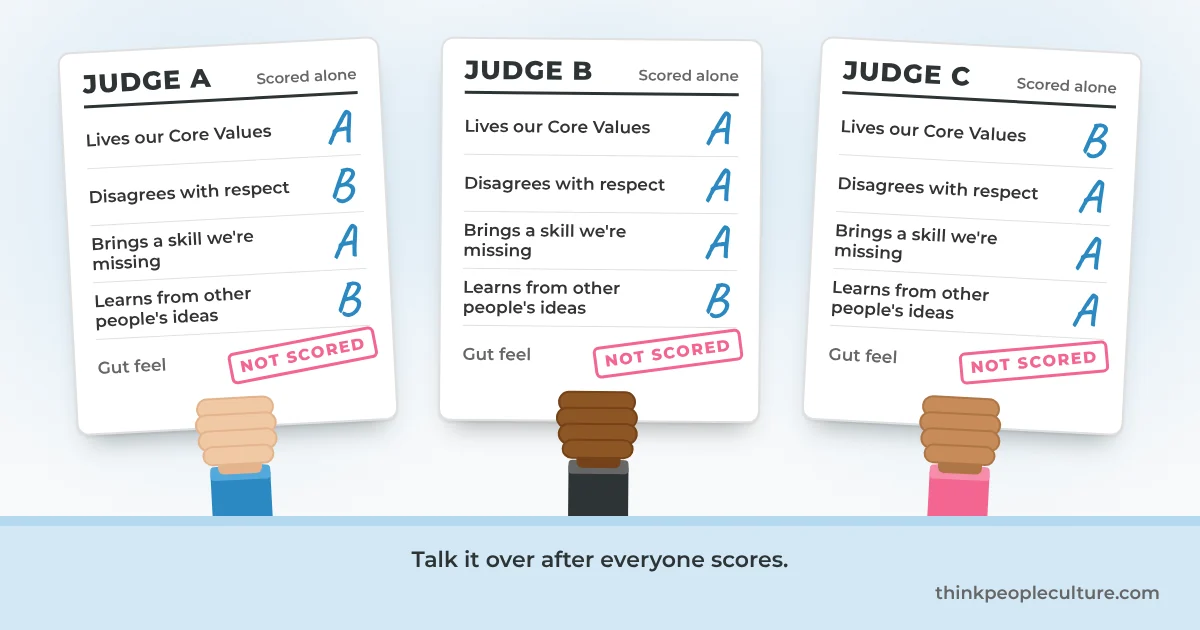
4. Score Alone, Then Talk
OPM says panel interviews are usually scored with "each member rates applicant responses individually" before a group discussion. You should do the same. It keeps the loudest person in the room from deciding for everyone, and that's usually the person who signs the paychecks. Put people from different teams and levels on the panel, too.
If your process is losing strong people before the final round, my post on why your hiring process keeps losing good candidates covers the leaks.
The Takeaway: decide what good looks like before you meet anyone, then grade every candidate against it. Your gut can come along for the ride, it just doesn't get a vote.
What ADDS Looks Like on a Normal Tuesday
Hiring for Culture Add is half the job. If the new person walks into a team where it isn't safe to be different, she'll either shrink to fit or leave. Then you've got an Employee Retention problem that started in the interview. The ADDS culture elements are "Authenticity, Diversity, Direct Communication, and Support," and each one shows up in small daily moments.
Authenticity looks like a manager saying "I got that wrong" in the team meeting, out loud, before someone else has to point it out. If leaders never admit a miss, nobody else will either.
Diversity looks like the newest person getting asked for their take first, before the senior people anchor the room. It also looks like a meeting where somebody's job is to argue the other side.
Direct Communication looks like feedback given in the one on one, the same week, to the person it's about. A sigh in the group chat doesn't count.
Support looks like a manager clearing a roadblock instead of asking for another status update on it. It's also the coworker who covers a deadline without keeping score.
Difference without trust just turns into arguing. A 2026 study of 103 teams backs this up (Journal of Business Research). More variety in how people think made teams more creative, but only up to a point. Past that point, creativity dropped, and conflict was a big part of why. In teams with more trust, the differences caused less conflict.
So, ADDS isn't four posters for the break room. Authenticity and Support build trust, and that trust keeps Diversity and Direct Communication from blowing up the Monday meeting.
None of this needs a budget, it needs leaders who protect the person who disagrees. The book puts the job on leaders, "Leaders must actively protect difference and create spaces where constructive dissent isn't just tolerated but celebrated and rewarded."
That's a lot to ask of managers right now, and here's the 2026 number. Gallup's State of the Global Workplace 2026 report found manager engagement fell from 31% in 2022 to 22% in 2025. That slide drove most of the drop in global employee engagement, which landed at 20%.
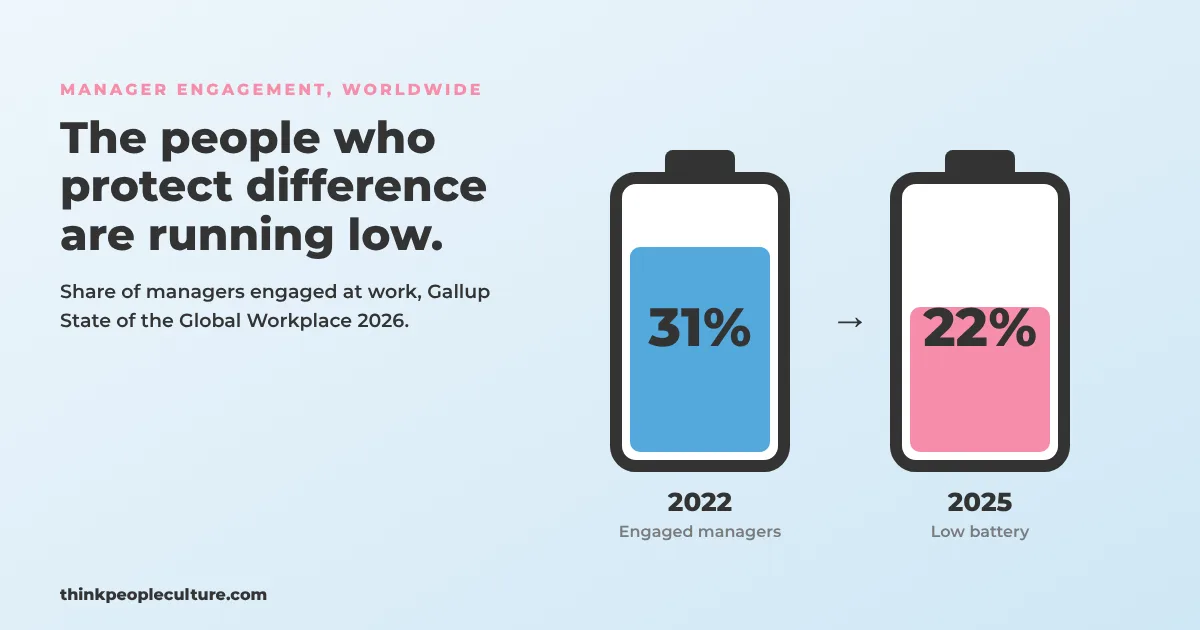
| Engaged at work, worldwide | 2022 | 2025 |
|---|---|---|
| Managers | 31% | 22% |
| People who don't manage anyone | 20% | 19% |
It's hard to protect the person who disagrees when you're running on fumes yourself. That's how a great hire ends up shrinking to fit, and it's why training new managers matters so much here.
The Takeaway: ADDS lives in how your managers react on an ordinary Tuesday, so watch the reactions, not the posters.
The ADDS Playbook for a Company With 12 to 350 Employees
The ADDS Playbook from my book has four steps, "Map the current state, Define what needs to change, Build new systems, and Sustain through repetition." This is how it works when you have no HR department and you're fitting it in between everything else.
1. Map the current state. Pull up your last five to ten hires and write down what they have in common. Look for the same schools, the same past employers, the same referral source or the same personality. Then ask your team one question, "What's one thing we keep getting wrong?" Where those two lists overlap is your gap.
2. Define what needs to change. Pick one or two gaps, not ten. Then write your Core Values as behaviors someone could describe in an interview. "Integrity" is a poster. "Tells the client about a mistake before the client finds it" is something you can ask about. And nobody's Core Values have ever included "owns the same fleece vest as the CEO."
3. Build new systems. That means the scorecard, the same questions for everyone and a panel that scores alone. Rewrite the job ad to say what you're missing, instead of asking for a "rock star who fits our family." Then add an Onboarding plan, so the new person's first month invites their ideas instead of training them out.
4. Sustain through repetition. Check in with every new hire at 90 days and ask, "What have you seen here that we should change?" Then change something, or the question stops working. Once a quarter, look at your last few hires and ask whether you're filling gaps or making copies.
Company size changes who does the work. Under about 40 people, you're probably in most interviews yourself, so the scorecard is your guardrail against your own gut. From about 40 to 150, managers start hiring, and they'll hire people like themselves unless someone shows them another way. Past 150, every team starts running its own version of "fit," so one shared scorecard keeps it fair across the company.
You don't have to build the worksheets from scratch. Don't Suck at Culture comes with the Culture Add Toolkit, ten worksheets that walk you through Map, Define, Build and Sustain.
The Takeaway: start with one gap and one scorecard, then repeat it until it's just how you hire.
When "Not a Fit" Becomes a Legal Problem
The word I promised you is "fit." Written alone in your interview notes, with nothing about the job next to it, it's the word an employee's lawyer would circle first.
Federal law bans hiring decisions based on race, color, religion, sex, national origin, age, disability and other protected traits. Title VII and the ADA cover employers with 15 or more employees, and the federal age discrimination law covers employers with 20 or more (EEOC). Your state's law may cover you at a smaller size, so check it.
The EEOC has called out "fit" by name. Announcing a 2019 sex discrimination lawsuit, an EEOC regional attorney said, "some employers still make assumptions about which applicants will 'fit' the workplace based on their gender" (EEOC press release).
EEOC guidance also says employers "must not use selection criteria that have a significant discriminatory effect without being able to prove that the criteria are job related and consistent with business necessity" (EEOC national origin guidance).
Gut calls don't get a free pass either. In Watson v. Fort Worth Bank and Trust, the Supreme Court held that Disparate Impact analysis "may be applied to a subjective or discretionary promotion system" (Justia). Disparate Impact means a practice that looks neutral but screens out one group more than others. The Court also pointed to the problem of "subconscious stereotypes and prejudices."
You may have heard Washington backed off Disparate Impact. In April 2025, Executive Order 14281 told federal agencies to drop it as far as they can. But the rule is still in Title VII itself. It says an employer has to show a challenged practice is "job related for the position in question and consistent with business necessity."
An executive order doesn't change that text. Employees can still bring their own claims, and states like California and New York have their own versions. The EEOC's gender case above was also about treating people differently because of who they are, which the order doesn't touch.
To be fair, using judgment in an interview is normal, and asking about values isn't illegal. The risk is a vague "fit" you can't explain in terms of the job. A written scorecard tied to job behaviors is how you show your reasons were about the work. If you're worried about a specific hiring decision, or a candidate has already complained, call an employment attorney before you do anything else.
The Takeaway: if you can't explain "not a fit" in one sentence about the job, don't write it down and don't decide on it.
Where I Come In
Maybe you pictured your last three hires just now, and they all kind of looked the same. That's usually a process problem, and a process can be fixed.
We build Culture Add into the whole hiring process, from naming the gap to writing the scorecard to coaching your managers to interview without a vibe check. If you'd rather hand off the hiring itself, Recruitment Process Outsourcing covers it from the job ad to the offer.
If the bigger problem is the culture new hires walk into, the Culture Development work on my services page turns your Core Values into behaviors people can see.
The cost of waiting is quiet. It's one more hire who looks like the last five, and one more blind spot you won't notice until a customer does. Bring the job titles and backgrounds of your last three hires when you grab a time on my calendar.
If they could sit together at a family reunion without anyone asking questions, you'll walk away knowing which gap to hire for next, and if I'm not the right person to fix it, I'll say so.
I'm an HR pro, not a lawyer. This is my read of the law as of October 2026, so run your own situation by an employment attorney.
Hire Better. Lead Smarter. Don't Suck!
If you'd like help hiring for Culture Add without losing what already works, my 90 Day Engagement gives you 3 months of senior HR help on it.
Common Questions
What does culture add mean?
Culture Add means hiring someone who shares your Core Values and brings something your team is missing. That could be a skill, an experience, a background or a different way of solving problems. The values stay the same, and everything else is allowed to be different.
What's the difference between culture fit and culture add?
Culture Fit asks whether someone matches the team you already have, and it usually runs on gut feel. Culture Add asks what the person brings that you don't have yet, and it's judged against behaviors you define ahead of time. Fit tends to give you more of the same, while Add fills your gaps.
What are good culture add interview questions?
Ask for real examples instead of opinions. Good ones include "Tell me about a time you disagreed with your manager and how it landed," "What did you do at another job that you'd bring here?" and "From what you've seen, what do you think we're missing?" Ask every candidate the same questions in the same order.
How do you score a culture add interview?
Score each answer from 1 to 4, from no real example up to a clear example with the result and what they learned. Each interviewer scores alone before the group talks. Add one written line on what the person would bring that the team doesn't have, and leave no box for "fit."
Is hiring for culture fit discriminatory?
It isn't automatically illegal, but an undefined "fit" can hide bias and create legal risk. The EEOC has criticized employers who assume which applicants will "fit" based on gender, and the Supreme Court has said subjective hiring and promotion practices can be challenged for Disparate Impact. If you're worried about a specific decision, talk to an employment attorney.
Can a small company hire for culture add?
Yes, and it's easier at a small company because you can change the process this week. Start by naming one or two gaps, write a short scorecard and use the same questions for every candidate. A company with 12 to 350 employees doesn't need an HR department to do this, it needs a process it repeats.
The question owners ask right after this one
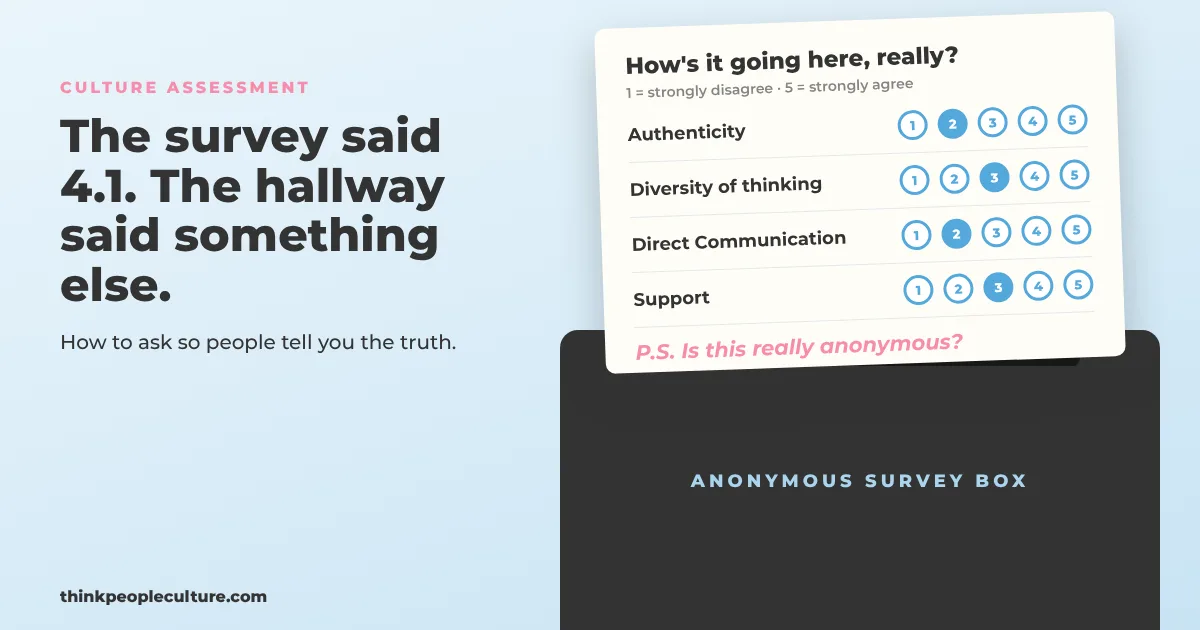
How to Run a Culture Assessment: A Step by Step Guide for Growing Companies
How to run a culture assessment step by step: what to measure, a short anonymous survey, listening sessions, how to read results and what to fix next.
Read the Full Post about How to Run a Culture Assessment: A Step by Step Guide for Growing Companies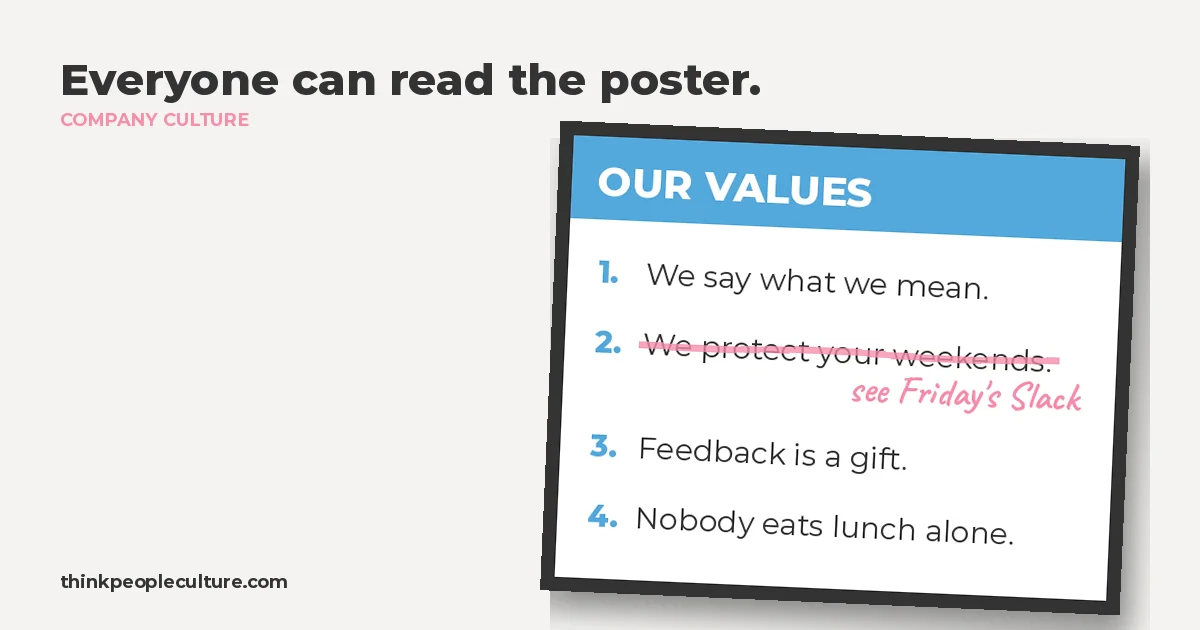
How Company Culture Actually Shapes Day to Day Work
Culture shows up in who speaks up in the meeting, how feedback lands and what happens in a hard week, not on the poster. How to read yours and change it on purpose.
Read the Full Post about How Company Culture Actually Shapes Day to Day WorkOr skip the reading and see how I'd take this off your plate.
HR Help in Your Inbox
My free newsletter for owners with no HR person, with plain answers sent when there's something worth reading.
We respect your privacy. Unsubscribe at any time.