Why Our Hiring Process Keeps Losing Good Candidates
"Before we make an offer, can we see a couple more people?" That one sentence cost a client of mine, a 50 person software company, the best Operations Manager candidate they'd met all year. She'd already done four rounds, including one with two managers from teams she'd never work with. Everyone loved her. The CFO just wanted "one more comparison." I'll tell you how it ended in a minute, but you can probably guess, because it's the same way it ends for most companies that lose good candidates.
If your company keeps losing great candidates in the hiring process, and you're starting to wonder if it's them, this post is for you. It's usually the process.
Why Good Candidates Drop Out of the Hiring Process
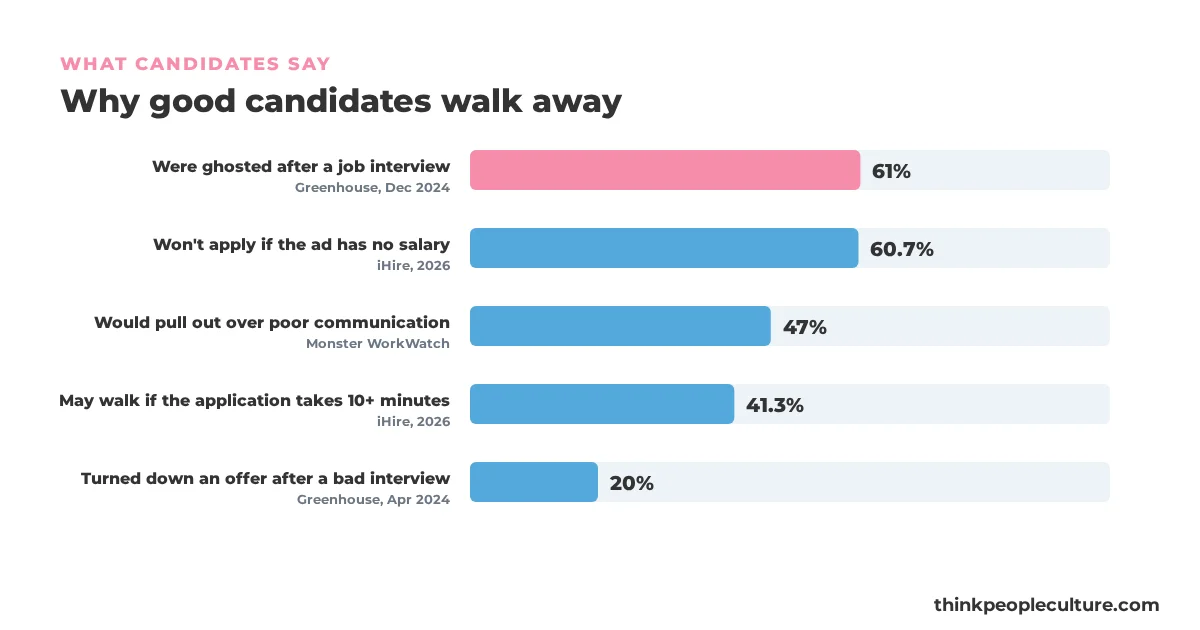
The data lines up with what owners and hiring managers tell me. In a Greenhouse survey from December 2024, 61% of job seekers said they'd been ghosted after a job interview. In Greenhouse's April 2024 report, 20% said they'd turned down an offer because of a poor interview experience. And, when Monster asked workers what would make them pull out of a hiring process, 47% named poor communication, like not getting updates or not getting replies.
Processes are also getting longer. Gem's 2025 recruiting benchmarks found the average time to hire grew to 41 days in 2024, up from 33 in 2021, with more interviews per hire too. SHRM's 2026 benchmarking puts the median time to fill a nonexecutive role at 39 calendar days.
1. Your Hiring Process Is Slower Than Theirs
The best candidates usually have more than one option, and plenty of them take whichever offer comes first, even when your company was their first choice and they were the right person for the job. Speed has always been the game. If another company can go from first call to offer in two weeks and yours takes six, the calendar picks the winner, and it isn't you.
The slowdown is usually the same three things: waiting on interview schedules, waiting on feedback, and waiting on someone to approve the offer. Small business hiring managers feel it. In a 2024 Robert Half survey, nearly 4 in 10 small and midsize business hiring managers said they worry about losing top candidates to a slow process.
The fix is to agree on the budget and who approves the offer before you post the job, so you can make an offer within a day or two of the final interview.
2. Too Many Rounds
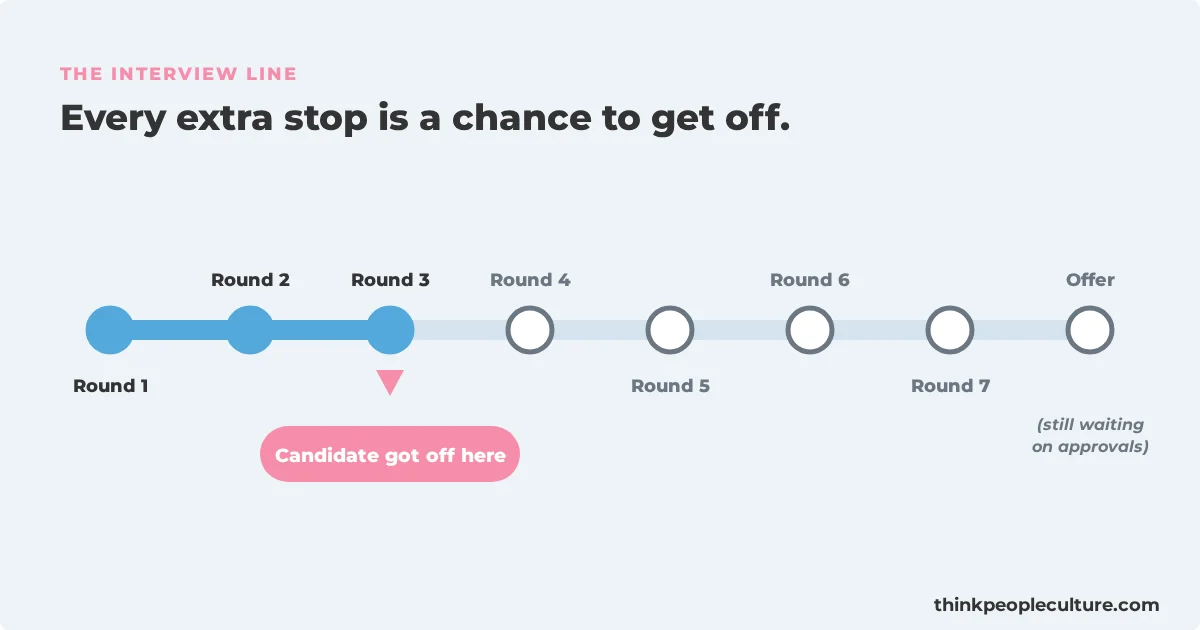
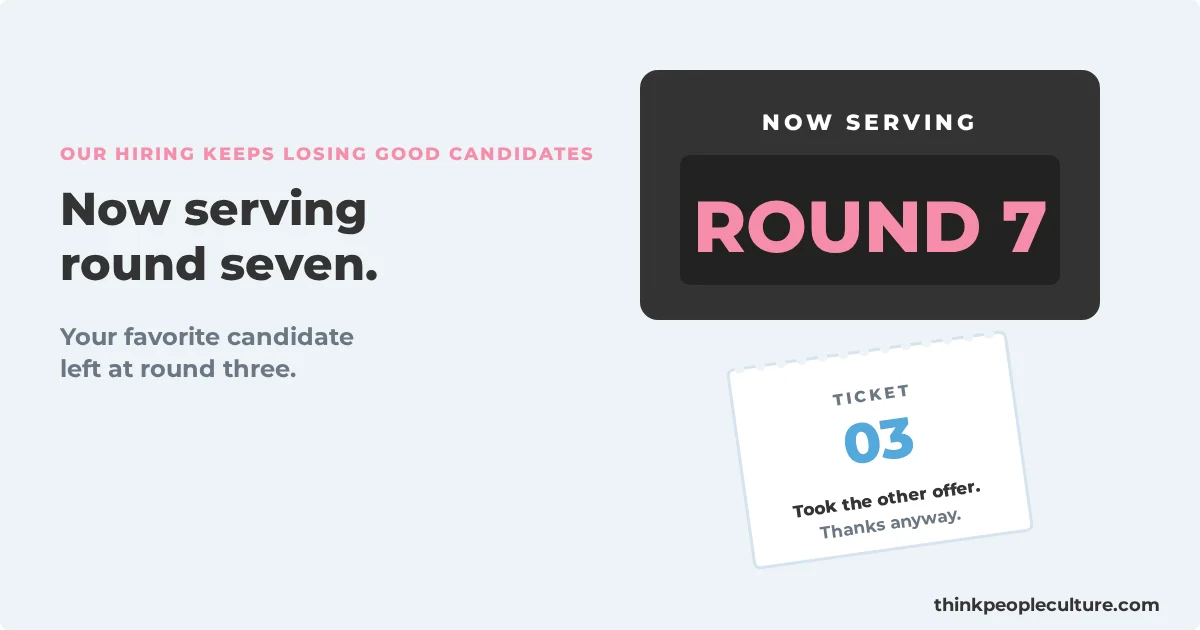
In my experience, when you ask candidates how many interviews is too many, a lot of them say the same thing, three is my limit. After that, every extra round tells them something about how your company makes decisions. If it takes six people and two months to say yes to a new hire, they figure that's how long it'll take to say yes to everything else, too.
Somewhere right now a great candidate is on round six, explaining her resume to a sixth person who didn't read it. The take home project doesn't help either. A 15 hour assignment before an offer is free consulting with extra steps, and the best people have better things to do with their weekend.
The fix is three rounds, tops. Decide who needs to meet the candidate and put them in the same round. Keep any work sample short, and pay for anything big.
3. Nobody Tells Them What's Happening
Silence is where good candidates go to find another job, and it's the fastest way to wreck the candidate experience. A week with no update feels like a no, so they keep interviewing elsewhere. And, the ghosting goes both ways now. Candidates are treating companies the way companies have treated candidates for years, and it turns out nobody likes it.
The fix is to tell every candidate the timeline on day one, and never let more than two business days go by without an update, even if the update is "we're still deciding."
4. The Pay Isn't Clear, or Isn't Competitive
Pay that's unclear or too low is one of the most common reasons good people walk. Candidates don't want to do four rounds to find out the job pays less than the one they have. As of February 2025, 60% of U.S. job postings on Indeed included pay information, so a posting without it looks out of date. In iHire's 2026 survey, 60.7% of job seekers said they won't apply if the ad has no salary information.
In California it's also the law. Employers with 15 or more employees must include the pay scale in job postings. Any employer must also give an applicant the pay scale for the job if they reasonably ask for it (Labor Code 432.3).
The fix is to set a real pay range before you post, share it in round one, and check it against the market. If you're not sure your pay is competitive, I wrote about pay and classification problems growing companies ignore.
5. The Hiring Manager Is the Bottleneck
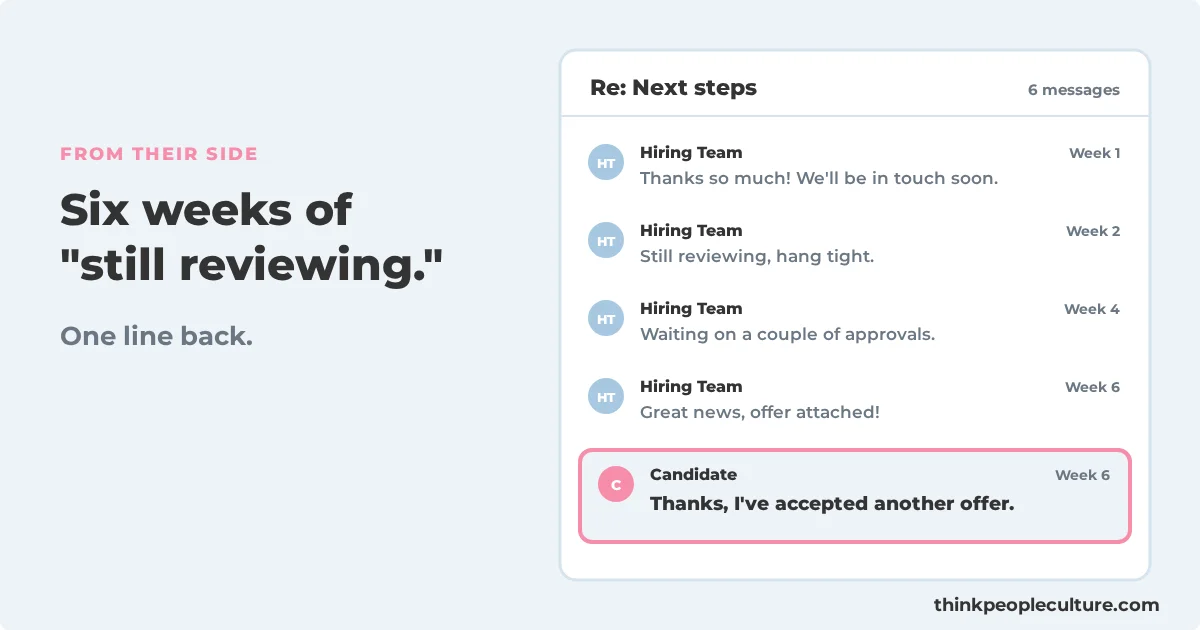
In most small companies the process moves fast until it hits the hiring manager's desk. A recruiter can find qualified candidates all day, but only the hiring manager can say yes to hire one. They're busy doing their actual job, feedback sits for a week, and then they reappear in a panic once their favorite candidate takes another offer.
The other version is the manager who wants to "see what else is out there." That's how a 9 out of 10 candidate becomes someone else's new hire. A missed hire never shows up on anyone's report, but a bad hire does, so managers wait, and waiting is what loses the hire.
The fix is to name one decision maker, block interview time on the hiring manager's calendar before the job opens, and set a rule that feedback is due within 24 hours of each interview.
6. The Application Is a Chore
Long applications lose people before you ever meet them. If your application asks for a resume and then asks them to type the same resume into 14 boxes, you're mostly testing their patience.
The numbers back it up. In iHire's 2026 survey, 41.3% of job seekers said they may walk away if an application takes more than 10 minutes.
The fix is to apply yourself, on your phone, and cut anything you don't need until the first interview.
How to Fix Your Hiring Process Before the Next Hire
Back at the software company, by the time the CFO's "one more comparison" was done and the offer letter was approved, the candidate's current employer had found out she was looking and offered her a promotion. Her reply to the offer was two lines long. The owner was furious with his own process.
So, we changed the rules. Every opening now starts with a 30 minute kickoff where the owner, the hiring manager and I settle the six questions above. The rules are three rounds, one decision maker, a posted pay range and an offer within two business days of the final interview. Their next opening went from posted to signed offer in under a month, with the first choice candidate.
If your company is growing and hiring keeps falling apart, this is the kind of thing I fix as part of Fractional HR. If you need to recruit a lot of people fast, I also run recruitment under your brand, which I explain in how RPO works when it runs under your brand. To get new people productive once they say yes, read what a Fractional HR person does in the first 90 days.
If you've lost one too many good candidates this year, book a short call with me. Tell me what's happening and I'll tell you if I'm the right fit. You can also see my HR services, how I support California employers or the answers to common questions.
Common Questions
Why do companies lose good candidates during the hiring process?
The most common reasons are a slow process, too many interview rounds, poor communication, unclear or uncompetitive pay, a slow hiring manager and a long application. Any of those gives another company time to make an offer first.
How many interview rounds is too many?
In my experience, more than three rounds starts to cost you candidates for most roles at growing companies. Put the people who need to meet the candidate in the same round.
How long should the hiring process take?
As short as you can make it while still making a good decision. SHRM's benchmarking puts the median time to fill a nonexecutive role at 39 calendar days, and fast companies beat that by deciding the budget, the rounds and the decision maker before posting.
How can employers stop candidates from dropping out?
Share the timeline and the pay range early, and keep it to three rounds or fewer. Update candidates at least every two business days, and be ready to make an offer within a day or two of the final interview.
Do California employers have to post pay ranges?
Yes, employers with 15 or more employees must include the pay scale in job postings, and any employer must give an applicant the pay scale on reasonable request (Labor Code 432.3).
How do slow hiring timelines affect candidates?
Slow timelines give good candidates time to accept other offers or get a counteroffer from their current employer. Long silences also make them think the answer is no.
How can I improve the candidate experience?
Make the application short, explain the process up front, respond quickly, keep interviews organized and give a clear answer either way.
Hire Better. Lead Smarter. Don't Suck!
Get HR Insights Delivered
Join our newsletter for the latest HR trends, tips, and best practices delivered straight to your inbox.
We respect your privacy. Unsubscribe at any time.