What Does a Fractional HR Person Do? The First 90 Days, Month by Month
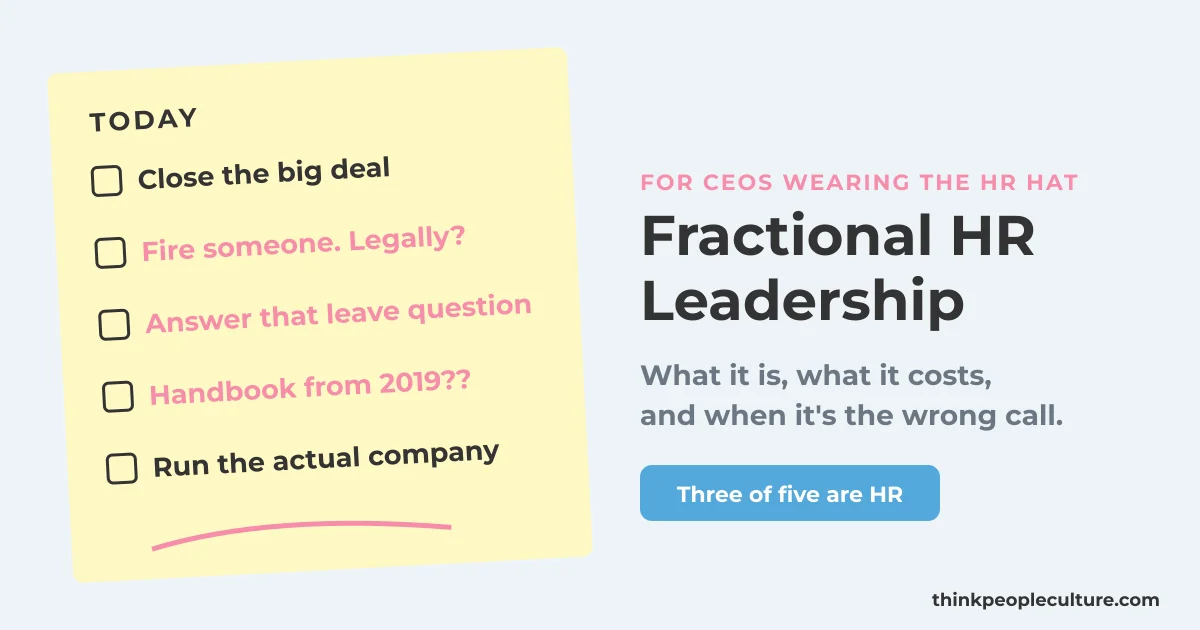
"I don't think I can keep doing this." The Office Manager at a 45 person accounting firm said that to the owner on a Tuesday afternoon, standing in his doorway with a stack of PTO requests. She'd been running payroll questions, benefits, onboarding and the front desk for three years, and the job had quietly tripled. The owner called me that week. He asked the question every owner asks first, "So, what exactly would you do?" It's a fair question, and here's the honest answer, month by month, including the part where three people found out their job titles weren't what they'd been putting in their email signatures.
What Does a Fractional HR Person Do?
A Fractional HR person is an experienced HR leader you bring in part time, usually on a monthly retainer, to own the people side of your business. They do the HR strategy and the hands on HR work: compliance, policies, manager coaching, employee relations, terminations, onboarding and often hiring. As of October 2026, Go Fractional's rate pages use about 13 hours a week as the typical load for Fractional HR roles, and the first few months often take more.
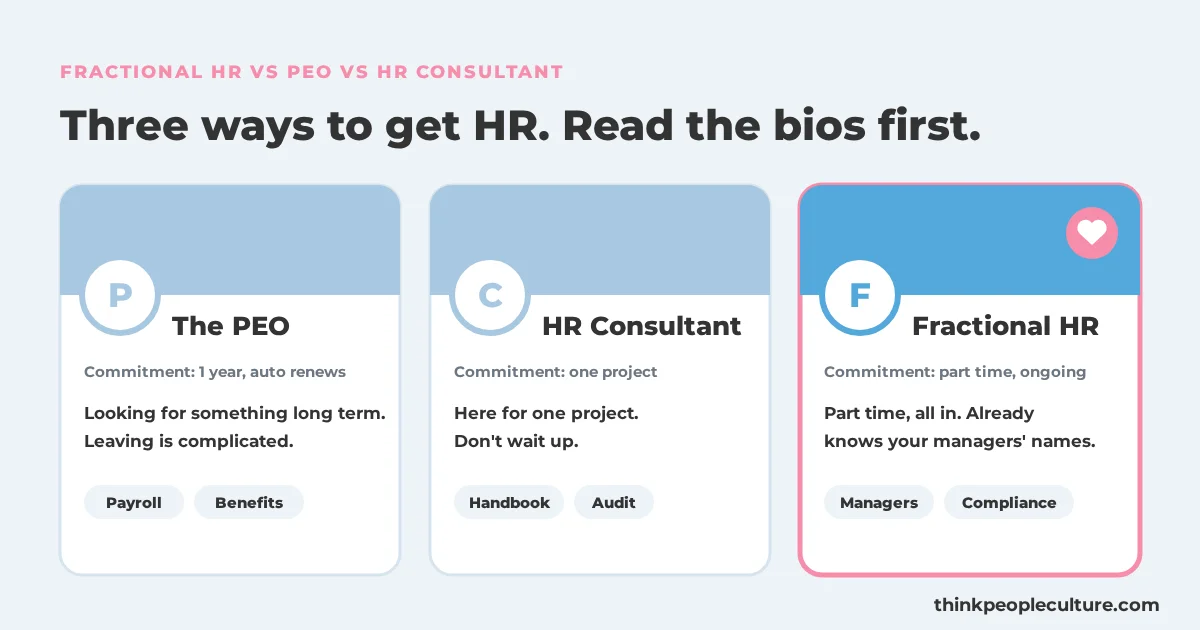
It's different from an HR Consultant, who usually does one project and leaves, and from a PEO, which runs payroll and benefits but doesn't manage your people. I compared all three in Fractional HR vs PEO vs HR Consultant. You get senior HR expertise and real HR support without hiring a full time HR executive, which is why a lot of companies outsource HR this way before they build a human resources department.
Most small businesses bring in outsourced HR like this because they're too big for "everyone helps with HR" and not ready for a full time HR leader. If that's you, here's how the first 90 days of Fractional HR services usually go, month by month.
Before Day One: The Kickoff
The work starts with one conversation with the owner or CEO. What's on fire right now? What's coming in the next six months, like hiring, a new office, a manager who isn't working out? Who's been doing HR so far, and what are they tired of? You'll also hand over access to payroll, the HR files, the Employee Handbook and whatever spreadsheet everyone's been using for PTO.
The Takeaway: The first 90 days only go as fast as the access you give on day one.
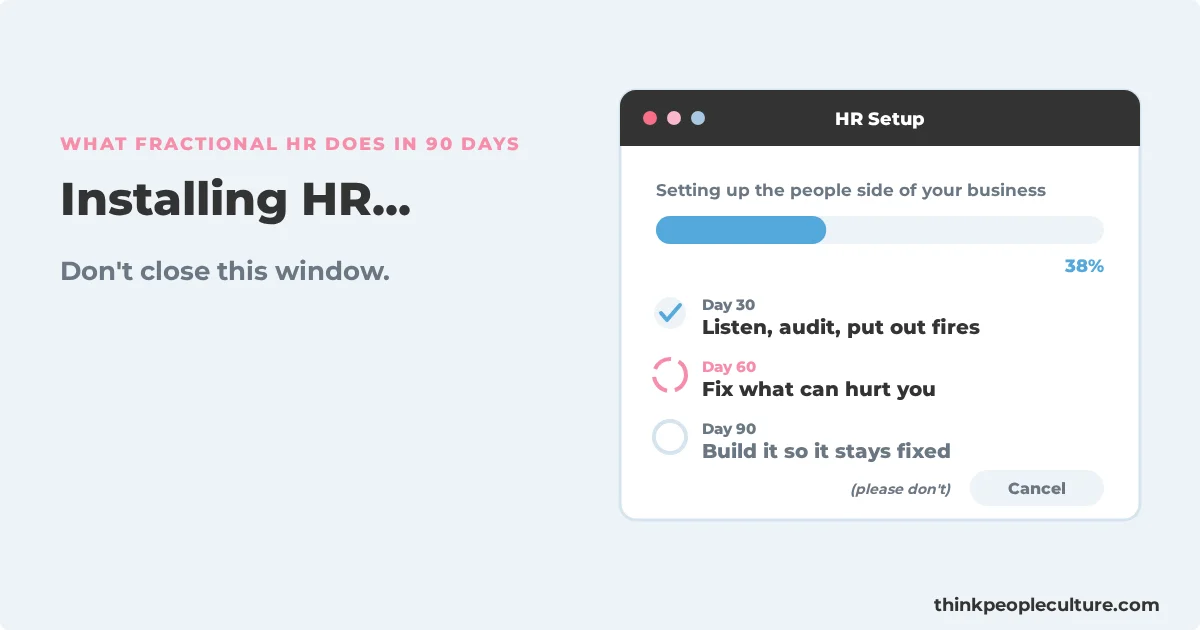
Days 1 to 30: Listen, Audit and Put Out Fires
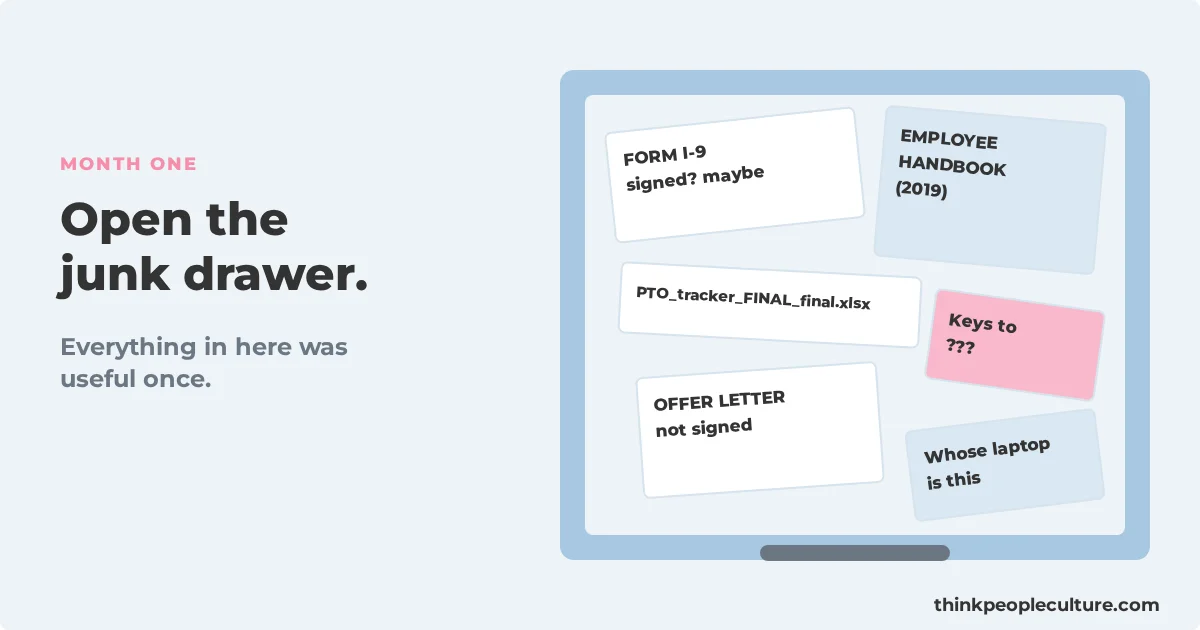
Month one feels like opening the junk drawer in your kitchen. Everything in there was useful once, and nobody's sure what half of it does now. A good Fractional HR leader spends this month doing two things at the same time.
Listening means talking to you, your managers and a handful of employees about what's working and what isn't. People will tell you more in the first month than they ever will again, because the new person doesn't have a side yet.
Auditing means checking the things that can get you fined or sued, starting with the basics. Is there a Form I-9 for every employee, with Section 1 done by the first day of work and Section 2 within 3 business days? Are new hires reported to the EDD within 20 calendar days? Does every nonexempt new hire get the wage notice California requires at the time of hiring? Are salaried people actually exempt? Is harassment prevention training current? Is there a Workplace Violence Prevention Plan? Is the Employee Handbook up to date with California law?
Month one also has quick wins, because something is always on fire. It might be a termination that's been put off, a complaint nobody's answered or a payroll mistake, and those get handled first, so you feel the difference before the audit's even done.
The Takeaway: Month one should end with a written list of every risk, ranked, and at least one fire already out.
Days 31 to 60: Fix What Can Hurt You
Month two is cleanup, in order of risk. Missing I-9s get fixed the right way. Misclassified roles get corrected, and I wrote a whole post on pay and classification problems growing companies ignore. Required training gets scheduled, since California employers with 5 or more employees must train new supervisors within six months of taking the role. The Employee Handbook gets rewritten to match what you actually do and what California law says.
This is also when onboarding gets a real checklist. If the plan for a new hire's first day is "they'll figure it out," they will, and some of what they figure out will be wrong.
It's a common gap. Gallup found that only 12% of employees strongly agree their organization does a great job onboarding new people.
And, this is the month you'll hear pushback. Somebody will say HR is "changing the culture," like that's a bad thing. Somebody will ask why the new HR person is so negative all the time. That's normal, and it usually means the fixes are landing where they should.
The Takeaway: By day 60, the things that can cost you real money should be fixed or on the calendar to be fixed by day 90.
Days 61 to 90: Build It So It Stays Fixed
Month three is about making sure you don't end up back in the junk drawer. That means simple systems people will actually use. Think a clear way to request time off, a review process managers can run in an hour, a hiring process that doesn't lose good people and a place for policies outside someone's inbox.
It also means coaching your managers. Most HR problems start with a manager who was great at the work and never got taught how to manage people. That's normal, and fixable. Here's my post on manager training for new leaders.
Day 90 ends with a short roadmap for the next quarter: what's done, what's next, and what you still need to decide.
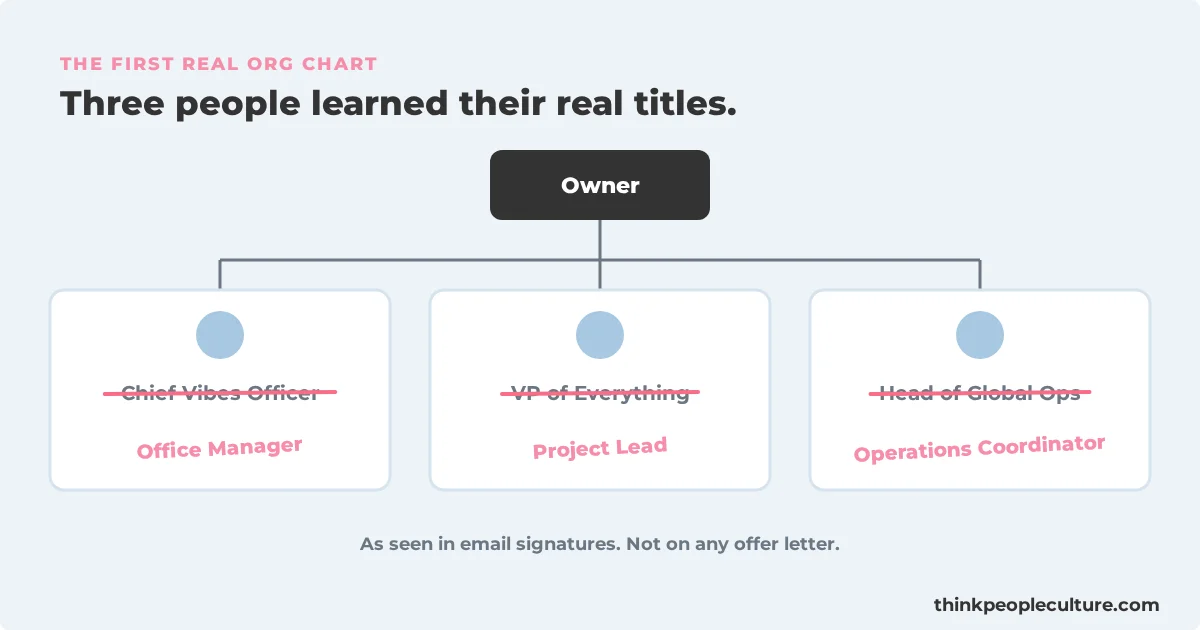
Back at the accounting firm, in month one we drew the company's first real org chart, and three people found out their job titles weren't what they'd been putting in their email signatures. That was a fun meeting. PTO requests had been going to the owner personally and taking about two weeks to get a yes. We wrote a policy, gave approvals to the managers, and the yes started coming the same day. By day 90 the files were clean, the Employee Handbook was new and the Office Manager was back to running the office. She stopped standing in the owner's doorway.
Benefits of Fractional HR You'll Notice as the Owner
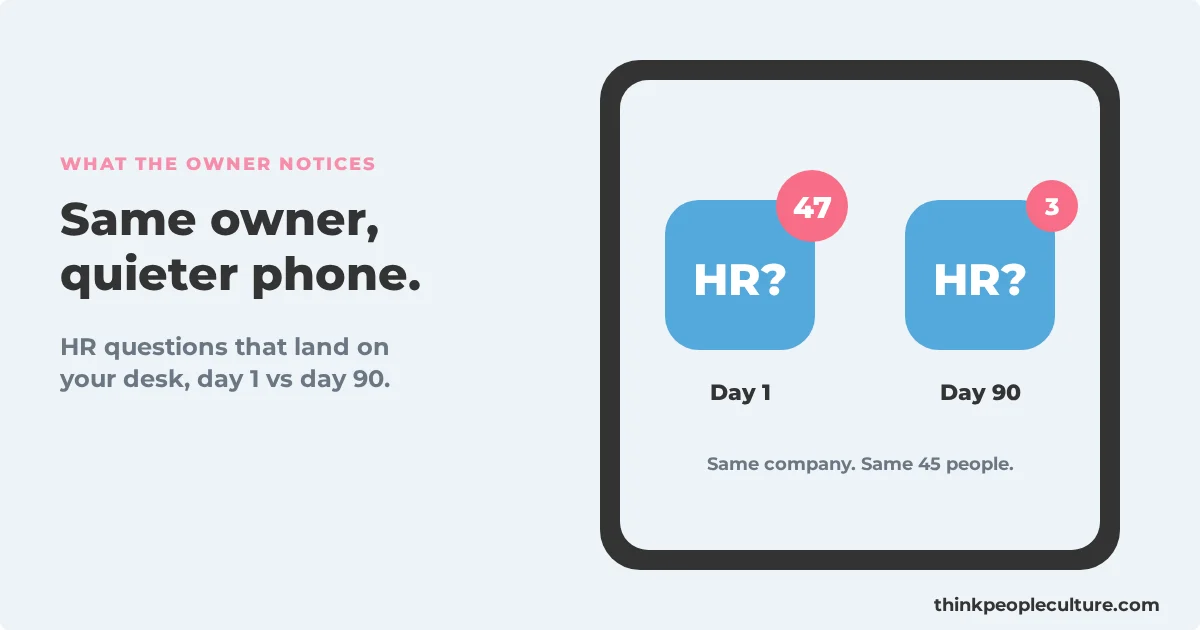
A good Fractional HR person should make your phone quieter. By the end of the first 90 days, people should stop bringing every HR question to you. Managers handle more on their own, and you know what's compliant and what isn't, in writing. When something big comes up, like a termination or a complaint, you have someone you can call who already knows the history.
Red Flags in the First 90 Days
Not every Fractional HR engagement goes well, so here are the red flags to watch for in the first three months.
No audit
If nobody's checked your I-9s, files and classifications by day 30, nobody knows your real risk.
Just templates
Templates are fine until one still has someone else's company name in the footer. A boilerplate Employee Handbook that doesn't fit your business gives you a false sense of security.
They never talk to your managers
HR that only talks to the owner can't fix how your managers manage.
You're still answering every question
If day 90 looks like day 1 from your desk, something's wrong.
What You Have to Do as the Owner
Fractional HR still needs you. You'll need to give access fast, show up for a short check in each week, make decisions when they're needed and back the changes when people push back. The owners who get the most out of the first 90 days are the ones who say "yes, do that" quickly.
If you're wondering what the money side looks like, I laid out real market rates in how much Fractional HR costs per month. If you're not sure you need HR yet, read does a small business need an HR department.
If your Office Manager has that look, or you're the one standing in the doorway, book a short call with me. Tell me what's going on and I'll tell you if I'm the right fit. You can also see my HR services, read what Fractional HR leadership is, see how I support California employers or check the answers to common questions.
Common Questions
What does a Fractional HR person do?
A Fractional HR person is a part time senior HR professional who owns the people side of your business on an ongoing basis. That covers compliance and policies, manager coaching, employee relations, terminations, onboarding and often hiring.
What happens in the first 90 days with Fractional HR?
Month one is listening, an audit and the urgent fixes. Month two is cleanup in order of risk, like I-9s, classification, training and the Employee Handbook. Month three is building simple systems and coaching managers so the fixes stick.
How many hours a week does Fractional HR work?
It varies by company. As of October 2026, Go Fractional's rate pages use about 13 hours a week as the typical load for Fractional HR roles, and the first few months often take more.
How is Fractional HR different from an HR Consultant?
An HR Consultant usually does one project and leaves. Fractional HR stays on an ongoing basis, gets to know your people and handles whatever comes up.
When should a business consider Fractional HR?
When HR work no longer fits in someone's spare time but you're not ready for a full time HR leader. In my experience that's often somewhere between 30 and 150 employees.
What should I give a Fractional HR person on day one?
Access to payroll, personnel files, the Employee Handbook, any HR spreadsheets and a list of the issues keeping you up at night.
How fast will I see results?
You should see at least one urgent issue handled in the first month. The big compliance risks should be fixed or scheduled by day 90, and culture and manager habits keep improving after that.
Hire Better. Lead Smarter. Don't Suck!
Get HR Insights Delivered
Join our newsletter for the latest HR trends, tips, and best practices delivered straight to your inbox.
We respect your privacy. Unsubscribe at any time.