Do You Have to Pay Employees for the Company Holiday Party?
Paying for HR help and still the one fixing it?
Answer 8 yes or no questions, and in 2 minutes you'll know if you need software, a PEO or one person who owns it.
Show me what fitsThe Short Answer: If the party is optional, after hours and nobody is working it, you usually don't owe your hourly people anything. If you make it mandatory, hold it during the workday or put someone to work at it, that's paid time. If it pushes an hourly person past 40 hours that week, it's Overtime too.
Somewhere right now a 40 person company just put Steve from sales in charge of the open bar.
Steve is thrilled, mostly because Steve has a budget and no adult supervision.
Here's the part Steve didn't read. The second your invite says "attendance required", your party stops being a party and turns into a shift with snacks.
When Holiday Party Time Counts as Paid Time
The federal rule is older than most of your staff and it's pretty simple.
Time at a work event stays off the clock only when four things are all true (29 CFR 785.27):
- It's outside the person's regular work hours.
- Going is truly voluntary.
- It has nothing to do with their job.
- They don't do any work while they're there.
Miss one and you're paying for the time.
A Friday night party that people can skip passes all four. A 2:00 PM party in the break room on a Tuesday fails the first one, so everyone's already on the clock and you just keep paying them like normal.
What "Mandatory" Really Means
Most owners think mandatory means the word "mandatory" is on the invite. It's wider than that.
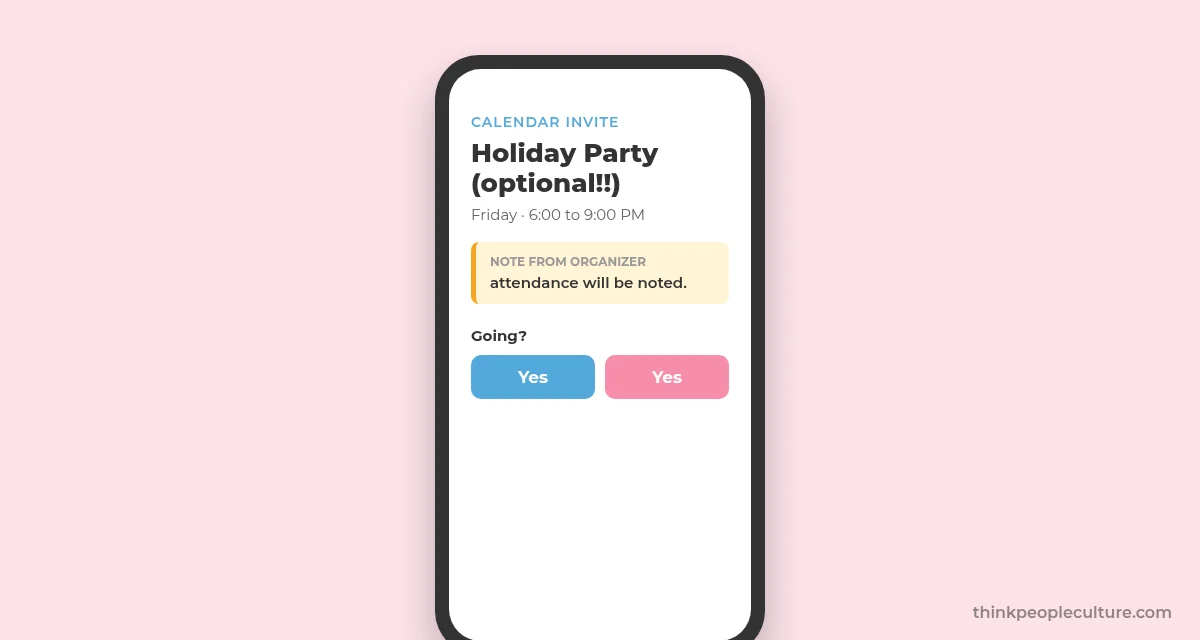
The rule says attendance isn't voluntary if you require it. It also isn't voluntary if people are led to believe that skipping will hurt them at work (29 CFR 785.28).
So "it's optional, but the owner notices who's missing" is mandatory with extra steps.
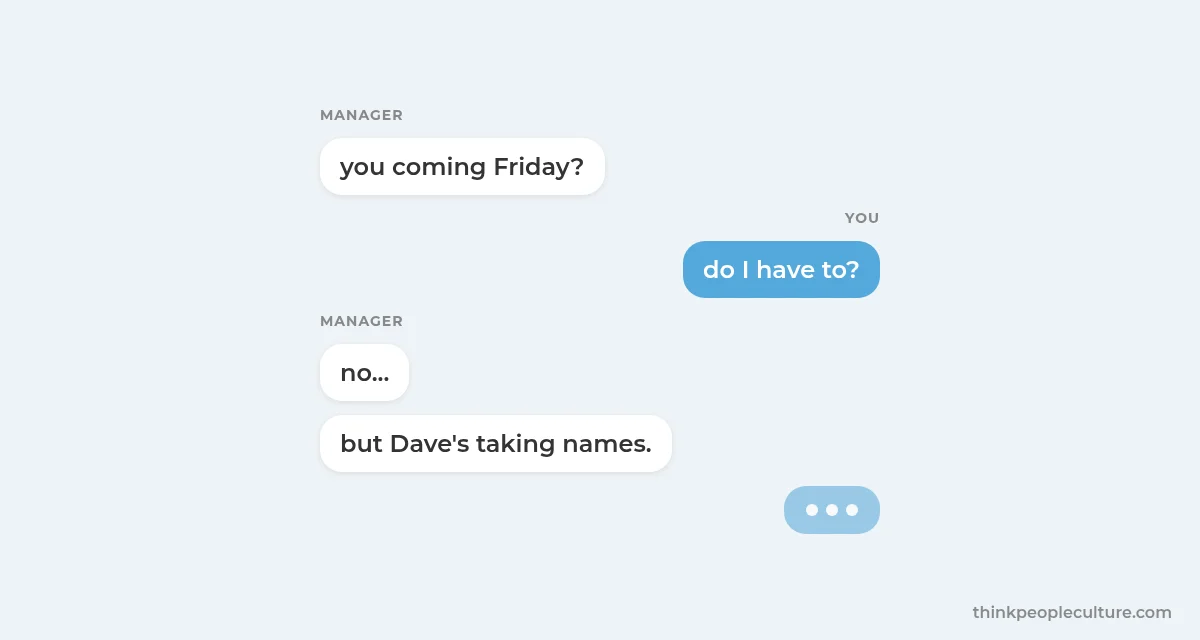
This is where your managers get you in trouble without meaning to. One "you're coming Friday, right?" from a boss can turn a free party into a paid one. If your managers have never been told that, this is the training most of them never got.
Who Gets Paid and Who Doesn't
Nonexempt (hourly) employees. If the party counts as work time, you pay them for it. If that time puts them over 40 hours for the week, you owe Overtime. In California you also owe it after 8 hours in a day.
Exempt (salaried) employees. Their salary already covers it. No extra pay.
If you just read those two words and aren't sure which of your people is which, that's a bigger problem than the party. Start with Exempt vs Nonexempt in California and then read when to fix pay and job classification.
Three Ways Owners Turn a Free Party Into Payroll
1. The mandatory lunch. In California, if you require people to come to a holiday lunch and then send them straight back to work, they never got their 30 minute Meal Break. That's one more hour of pay for each person, on top of the time itself (CalChamber).
2. "Can you just run the raffle?" The party can be 100% optional and you still owe pay to the hourly person you asked to set up, check coats, serve or clean. They came to work and it happened to have a DJ.
3. Talking shop. Awards, the year in review and hosting clients are all job related. The same CalChamber guidance says party time can count as hours worked when people have to discuss company business or host clients, even off site and after hours.
The Open Bar Is a Separate Bill
Pay is the small risk. The bar is the big one, and every state handles alcohol liability its own way. Ask your insurance carrier and your attorney before the invite goes out, not the Monday after.
A few things I'd do no matter what state you're in.
- Two drink tickets a person. Nobody has ever said "I wish that party had been sloppier."
- Real food, not a bowl of pretzels.
- A hired bartender who can cut someone off. That person is not Steve.
- A hard end time on the invite.
- Rides home on the company. It's the cheapest line on the whole receipt.
Your harassment policy doesn't clock out at 5:00 either. What happens at the party gets handled the same way as what happens at the office.
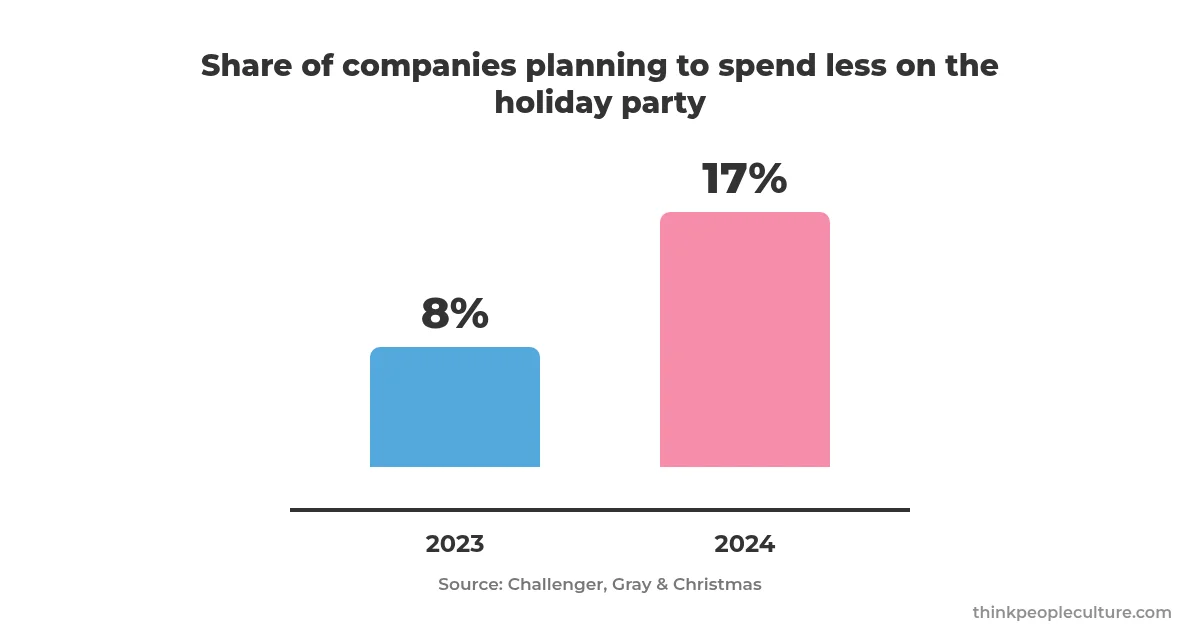
You may not need much of a bar anyway. In a Harris survey, 37% of workers said they'd rather have little to no alcohol at a holiday party (Axios, December 2024). In 2024, 17% of companies planned to spend less on the party, up from 8% the year before (Challenger, Gray & Christmas).
What to Put in the Invite
Copy these three lines and you've handled most of it.
This party is optional. Come if you'd like to, skip it if you wouldn't, and nobody is keeping a list.
It runs from 5:00 to 7:00 at [place]. Food and two drinks are on us and so is your ride home.
If we ask you to help set up or clean up and you're paid by the hour, that time is paid.
Then tell your managers to leave it alone. No head counts, no "we missed you."
So Should You Just Make It Mandatory and Pay?
You can, and for some teams it's the right call.
The easy version is to hold it during the workday. Everyone's already being paid, nobody has to find a sitter and people are home for dinner.
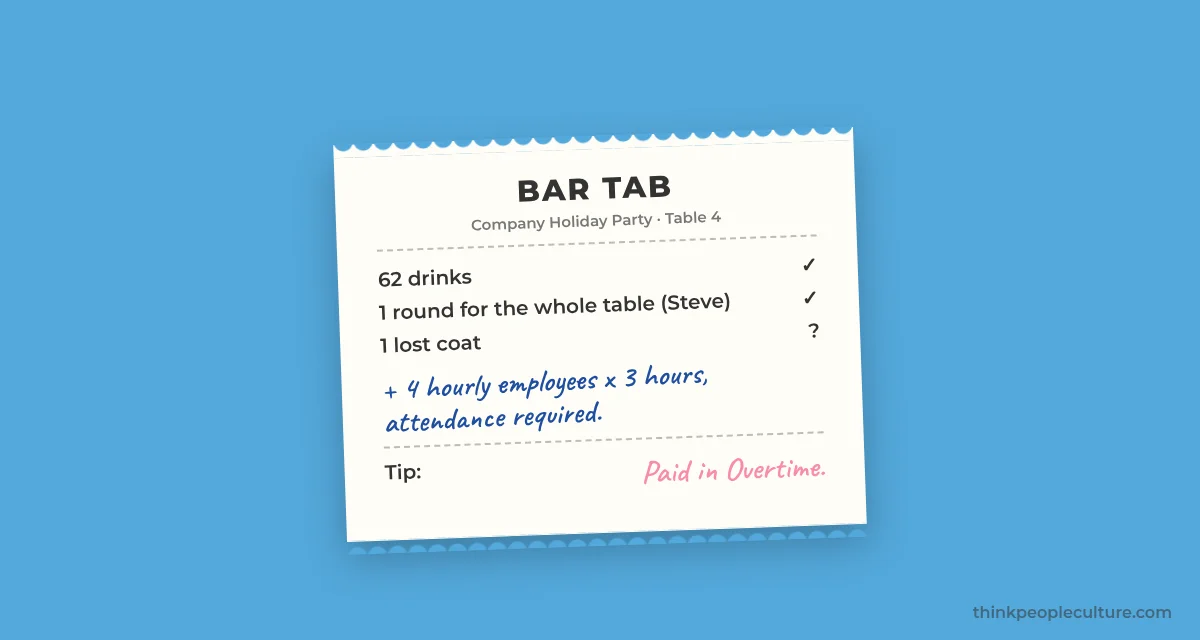
If you want everyone there at night, then pay your hourly people and move on. Four hourly employees for three hours is a small number next to a wage claim.
If you make it mandatory, you pay for the time. That's the whole rule, and it fits on a receipt.
Common Questions
Do I have to pay hourly employees to attend the holiday party?
Only if the time counts as work. It does when the party is required, held during work hours, job related or the person is working it. An optional party after hours where nobody works is unpaid.
Is it legal to make the company holiday party mandatory?
Yes. You then owe your Nonexempt employees pay for the time, and Overtime if it puts them over 40 hours that week.
Do salaried employees get paid extra for the holiday party?
No. An Exempt employee's salary already covers it.
What if an employee helps set up or clean up?
If they're paid by the hour, that time is paid, even when the party itself is optional.
Am I responsible if someone drinks too much at the party?
It depends on your state. Check with your insurance carrier and an employment attorney before the party, and plan the bar like you might be.
If reading this made you wonder who at your company is hourly, who's salaried and whether you've got that right, grab 25 minutes with me and we'll look at it together.
I'm an HR guy, not a lawyer, so run the legal parts past yours.
Hire Better. Lead Smarter. Don't Suck!
Bill
The question owners ask right after this one
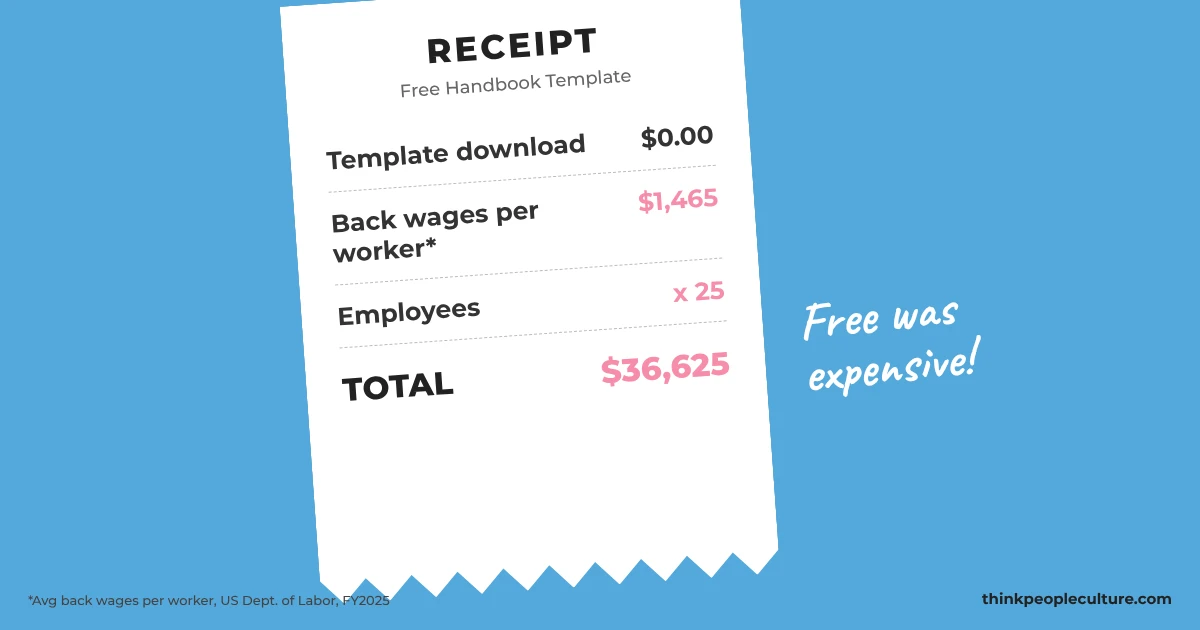
Small Business Employee Handbook
What to include in an Employee Handbook: the key sections, the state laws most employers miss and what to leave out. A plain checklist from an HR pro.
Read the Full Post about Small Business Employee Handbook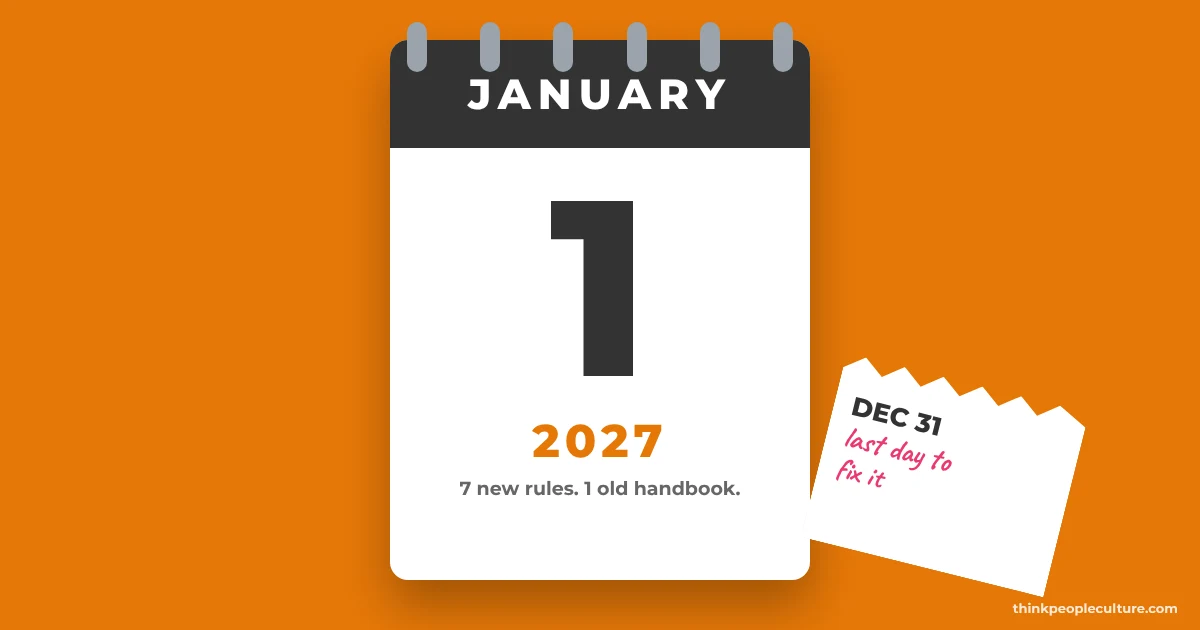
California Employee Handbook Changes for 2027: What to Update Before January 1
What California employers must update in the Employee Handbook for 2027: bereavement, immigration retaliation, dress codes, monitoring and pay.
Read the Full Post about California Employee Handbook Changes for 2027: What to Update Before January 1Or skip the reading and see how I'd take this off your plate.
HR Help in Your Inbox
My free newsletter for owners with no HR person, with plain answers sent when there's something worth reading.
We respect your privacy. Unsubscribe at any time.