Fractional CHRO, Fractional Head of People or Fractional HR: Which One Do You Need?
Paying for HR help and still the one fixing it?
Answer 8 yes or no questions, and in 2 minutes you'll know if you need software, a PEO or one person who owns it.
Show me what fitsYou've got three proposals on your desk. One says Fractional CHRO, one says Fractional Chief People Officer and one says Fractional Head of People, and the prices don't match, so you can't tell what you're missing.
The title isn't what moves the bill. By the end of this post you'll know what does, and you'll know the one answer on a proposal that should make you walk away.
That answer is in the last section, but it won't make sense until you've seen the two question test in the middle, so stay with me.
TL;DR: A Fractional CHRO, a Fractional Chief People Officer and a Fractional Head of People are the same kind of work under three titles: a senior HR leader who works part of the week for your company on a set contract.
The title matters less than the scope you sign for. For a company with 12 to 350 employees, the real choice is between that senior leader and plain Fractional HR help, and the answer depends on whether you need someone to set direction or someone to handle the daily load.
What Do Fractional CHRO, Chief People Officer and Head of People Mean?
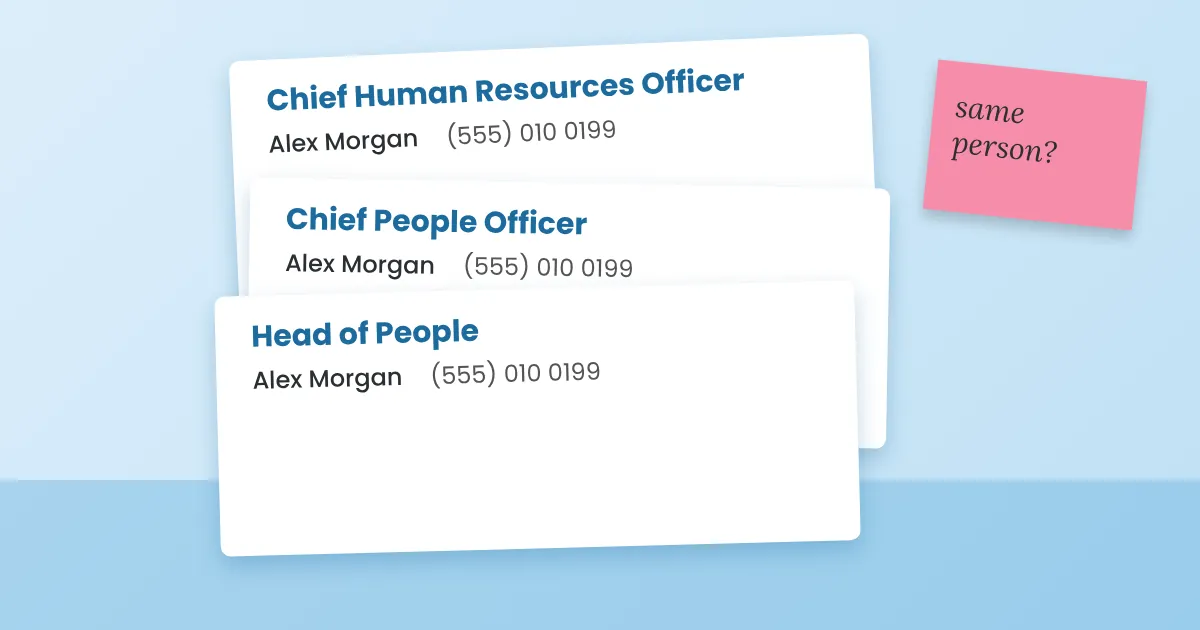
All three describe a senior HR leader you share with a few other companies. CHRO stands for Chief Human Resources Officer. Chief People Officer is the name a lot of HR leaders now prefer for the same seat, and Head of People is the one startups use when they aren't ready to hand out a C suite label.
Some companies go further and pick a title with big "CEO of awesome" energy, which tells you plenty about the logo and nothing about the job.
The "Fractional" part means that person works a set number of hours each week for you, the way a part time CFO would. For the longer version of the role itself, my post on what a Fractional CHRO is, what one costs and when to hire goes deep.
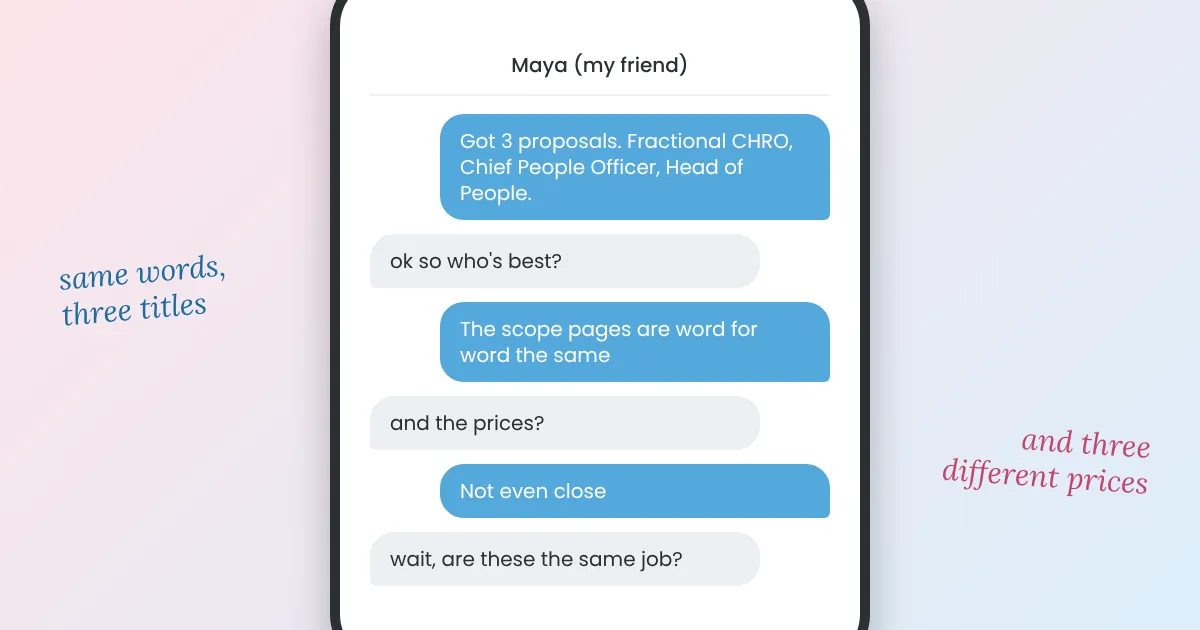
So, are the three titles really different? HR leaders can't agree. WorkLife reported that more of them are asking for Chief People Officer over CHRO because "people" sounds more like the modern job than "human resources" does.
JRG Partners draws a line, with the CHRO leaning toward compliance and risk and the Chief People Officer leaning toward culture and employee experience. FabricHQ says that in most companies it's the same job under a different name.
I don't draw that line when I work with a company, and you shouldn't have to either, because something else tells you more than the title does.
That something is who the person reports to and what they're allowed to decide. The HR leaders WorkLife talked to said the reporting line says more than the title, because a leader who reports to the CEO sits at a different table than one who reports to the finance chief.
A title is a name tag at a networking event. It tells you what they want you to call them, and nothing about what they can approve.
| Title | What it usually means |
|---|---|
| Chief Human Resources Officer (CHRO) | The formal executive title for the top HR leader |
| Chief People Officer (CPO) | The same seat with a softer name |
| Head of People | The same job, often without the C suite title |
| Fractional HR | The umbrella term. It can mean a senior leader or a part time HR Generalist, so ask which one is on offer |
Is a CHRO higher than a VP of HR? In a large company, usually yes. The CHRO sits on the executive team, and a VP of HR or VP of People usually reports up through them.
In a smaller company the VP of HR or the Head of People is often the top HR seat, so the title tells you less than who they report to.
So what does move the bill? It comes down to how big the decisions are and how many hours it takes to make them, and the two question test sorts that out. We'll get there, but first, here's what this person actually does when they show up.
The Takeaway: Ignore the title on the proposal and read the scope underneath it.
What Does the Work Look Like in the First 90 Days of Hiring a Fractional CHRO?
Most of the first 90 days goes to finding what's missing and building it. With me, most clients start with a 90 day foundation build and then move to an ongoing retainer for 3, 6 or 12 months.
The first month is reading what you already have, like offer letters, job titles, the Employee Handbook, how people are classified and what your managers really do all day.
The second month builds the missing pieces, which usually means Compensation Bands, a Performance Review rhythm and Manager Training. The third month makes it all run without someone standing over it.
The month by month version is in my post on what a Fractional HR person does in the first 90 days. Whatever title you hire under, ask for that plan in writing before you start.
A plan on paper is the easy part, though. The harder part is knowing which level of help you need in the first place, and that's what the next two questions are for.
The Takeaway: A written 90 day plan tells you more about a hire than their title does.
CHRO Level or Plain Fractional HR: Which Fits a Company With 12 to 350 Employees?
Ask two questions. Grab a pen, because you can answer both in about a minute.
- Are you facing decisions that shape the whole company, like a Compensation Structure, who reports to whom, a Layoff or a people plan for your board?
- Is the pain mostly the daily load, like leave questions, onboarding paperwork and new hire forms?
- If the first one is a yes, you need the senior leader, whatever title they carry.
- If the second one is a yes, a part time HR Generalist or HR Business Partner can be enough, and it costs less.
- If both are a yes, the senior leader sets the direction and a Generalist or software handles the daily load. Congratulations, you're a company.

Picture a company of 45 people that just promoted four people into management and has no HR person. Nobody is asking for a board slide yet, but the pay is inconsistent, two managers are guessing on Performance Reviews and a complaint is coming.
That's a senior leader problem, even at 45 people, because the fix is a system and not a task list.
Now picture a company of 120 people with a working Employee Handbook, clean Compensation Bands and managers who are trained, where the pain is that someone has to answer leave questions and run onboarding. That's a Generalist job, and paying for a CHRO would be paying for strategy you already built.
In my read, a lot of companies in this range land in between. They need senior judgment but not a seat on the executive team, and that's the middle that Fractional HR with a senior leader was built for.
Keep the walk away answer in the back of your head, because it connects to what you're about to see.
The Takeaway: Hire for the problem you have today, and let the title follow.
What Does Each Level Cost?
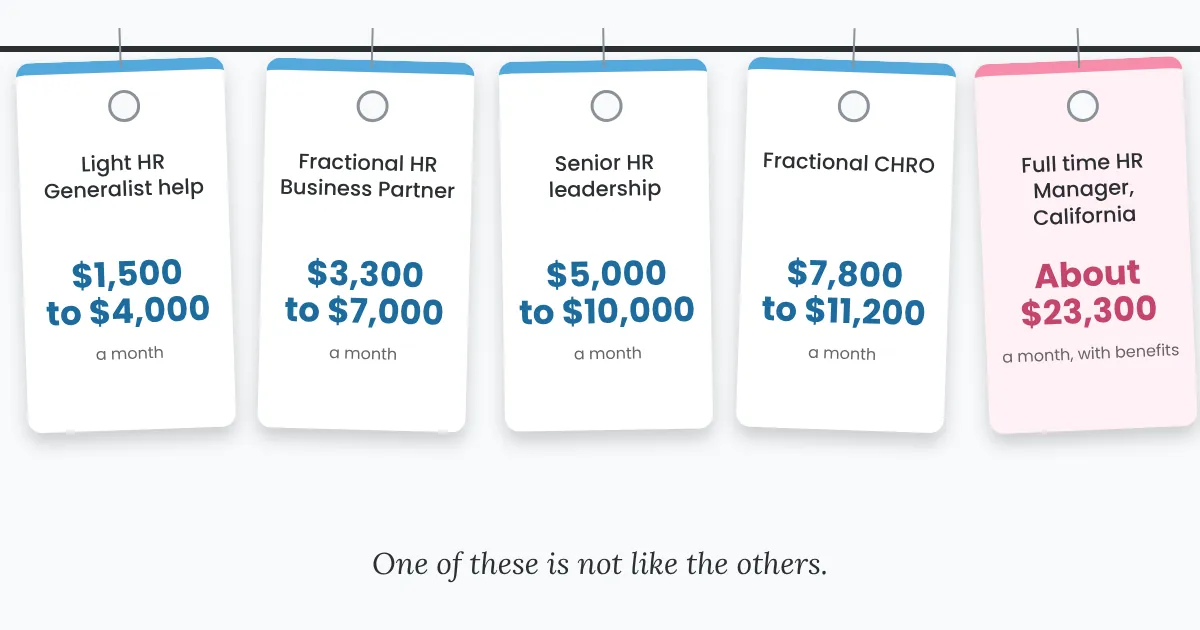
Published market rates run from about $1,500 a month for light help to $11,200 a month for a Fractional CHRO. Each number below is that company's own, so use the range to plan with and not as a quote. Look at the last row first, since it's the full time number every other row gets measured against.
| Type of help | Published monthly range | Source |
|---|---|---|
| Light, part time HR Generalist help | $1,500 to $4,000 | Dover |
| Fractional HR Business Partner, about 14 hours a week | $3,300 to $7,000 | Go Fractional, November 2026 |
| Senior HR leadership, 5 to 10 hours a week | $5,000 to $10,000 | Nimble Advisors |
| Fractional CHRO, about 14 hours a week | $7,800 to $11,200 | Go Fractional, November 2026 |
| Full time HR Manager in California, with benefits | About $23,300 | BLS wage and benefits data, worked out on my cost page |
With me, it's one flat monthly fee, sized to your company and what needs fixing, and nobody counts hours on either side.
A senior Fractional HR leader usually costs about a quarter to a third of a full time VP of HR in the first year. Salary.com puts the median pay for a VP of Human Resources in California at about $247,000 a year, which can include bonus pay and is before benefits, as of November 2026.
The full breakdown is on my page about what Fractional HR costs in 2026.
The Takeaway: The CHRO rate buys judgment, so don't pay it for work an HR Generalist can do.
When a Full Time Hire Makes More Sense
A full time senior HR leader makes sense when the people work fills a full week, every week. That usually means you're running an HR team of your own, or the leadership team is preparing for something big like an acquisition or a large Layoff.
Until then, you're paying a full salary for someone to look for things to do, and they will find them, which is how you end up with a very busy person and a fourth dashboard nobody opens.
A good Fractional leader will tell you when you've hit that point and help you write the job. I cover that in my post on when a startup needs a Fractional CHRO and when to go full time.
So you know the titles, the test, the plan and the price. Before you sign anything, there are six questions to ask.
The Takeaway: Go full time when the work is full time, and not a month before.
Questions to Ask Before You Sign, Whatever the Title
- Who does the work once the contract is signed, the senior person I'm talking to now or someone junior?
- What gets built in the first 90 days, and how will I know it's done?
- Is the fee flat, or does a meter run each time one of my managers calls?
- What's included, and what costs extra? Ask about investigations, the Employee Handbook, terminations and hiring.
- What happens at renewal, and how do I get out if it isn't working?
- When will you tell me it's time for a full time hire?
Remember the answer I promised you at the top?
If you hear "we'll sort that out once we start," that's your cue to walk away.
It means the scope isn't written down, and a scope that isn't written down is the one thing that changes your bill after you've signed.
Now go back to your three proposals. Cross out the titles and read only the scope. If two of them describe the same work at different prices, you found the gap, and if one of them says "we'll sort that out once we start," you found the walk away line.
And if you're still stuck between the titles after all this, put 25 minutes on my calendar. Tell me your headcount and what's breaking, and I'll tell you which level fits and whether I'm the right person for it.
You can also see how I work on my services page and my page for funded startups.
Hire Better. Lead Smarter. Don't Suck!
Common Questions
What is a Fractional CHRO?
A Fractional CHRO is a senior HR leader who works part of the week for your company on a set contract. You get Chief Human Resources Officer level judgment on People Strategy, Compensation Structure, Organizational Design, Employee Relations and hard calls without a full time salary, and the Talent Acquisition work goes to whoever runs your recruiting.
Is a Fractional CHRO the same as a Fractional Chief People Officer?
In practice, yes. Chief People Officer is a softer name for the same seat. What matters is the scope of the contract, so read what the person will build and decide and not the title.
What does a Fractional Head of People do?
A Fractional Head of People does the same senior work under a title without the C suite label. That usually means setting the pay structure, training managers, building the Employee Handbook and handling the hard calls.
Is a CHRO higher than a VP of HR?
In a large company, usually yes. The CHRO sits on the executive team and a VP of HR reports up through them. In a smaller company the VP of HR or Head of People is often the top HR seat, so check who the role reports to.
How much does a Fractional CHRO cost?
As of November 2026, Go Fractional lists a Fractional CHRO at $7,800 to $11,200 a month at about 14 hours a week, and a Fractional HR Business Partner at $3,300 to $7,000 a month. Fractional HR with me is one flat monthly fee sized to your company.
Should I hire a Fractional CHRO or plain Fractional HR?
If you're facing company wide decisions like a Compensation Structure, a reorganization or a Layoff, hire the senior leader. If the pain is mostly daily work like leave questions and onboarding, a part time HR Generalist can be enough and costs less.
How is a Fractional CHRO different from an interim CHRO?
An interim CHRO usually works full time for a short stretch to fill a gap, like the months between hires. A Fractional CHRO works part time on an ongoing contract, often on a project basis at first, and may serve more than one company. One executive search report puts the question this way, do you need strategic guidance or immediate operational ownership?
Can a Fractional CHRO work alongside an existing HR team?
Yes. The senior leader sets direction, builds the systems and handles the hard calls, while your HR Generalist keeps running the daily work inside them.
The question owners ask right after this one
Fractional HR vs Gusto: Your Payroll Is Handled, So Why Are You Still the HR Department?
Gusto runs payroll beautifully. Here's what its HR plans and HR Partners cover in 2026, the hard calls that still land on you and when fractional HR fits.
Read the Full Post about Fractional HR vs Gusto: Your Payroll Is Handled, So Why Are You Still the HR Department?
Bambee vs BambooHR: One Is an HR Team, One Is Software, and Neither Does the Hard Part
Bambee is an HR team on a subscription and BambooHR is HR software. Real 2026 prices, what reviews say and a ten second test for which one you need.
Read the Full Post about Bambee vs BambooHR: One Is an HR Team, One Is Software, and Neither Does the Hard PartOr skip the reading and see how I'd take this off your plate.
HR Help in Your Inbox
My free newsletter for owners with no HR person, with plain answers sent when there's something worth reading.
We respect your privacy. Unsubscribe at any time.